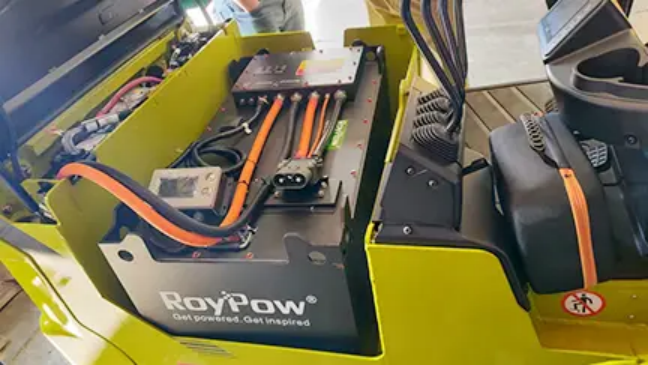
In applications where power demand and usage patterns vary significantly, battery performance becomes a defining factor in overall efficiency. Forklifts typically operate under continuous, high-load conditions, while trolling motors require steady and reliable output over extended periods on the water. These differences place distinct requirements on battery systems, making it necessary to look beyond basic specifications and consider how energy is delivered, managed, and sustained. As a result, lithium battery technology has become increasingly relevant for users seeking more adaptable and consistent performance across these scenarios.
Improving Operational Efficiency with Lithium Forklift Batteries
In industrial environments, forklift batteries must support continuous use, often across multiple shifts. Compared with conventional lead-acid systems, lithium forklift batteries provide a more efficient and predictable power solution.
When applied in real operating scenarios, their advantages can be understood from several key aspects:
- Longer usable runtime
Lithium batteries are able to deliver consistent power over extended periods, helping forklifts maintain performance throughout a full shift. - Reduced charging time
Faster charging allows equipment to return to operation more quickly, minimizing downtime and improving overall workflow efficiency. - Lower maintenance requirements
Unlike lead-acid batteries that require routine servicing, lithium systems reduce the need for manual upkeep, saving both time and labor. - Flexible voltage configurations
With options typically ranging from 24 to 80 volts, lithium forklift batteries can be adapted to different equipment types and workload demands.
These features make lithium batteries particularly suitable for warehouses, logistics centers, and manufacturing facilities where operational continuity is essential.
Advantages of Lithium Trolling Motor Batteries
In marine applications, especially for trolling motors, battery performance directly affects endurance and reliability. When evaluating what battery for a trolling motor is most suitable, lithium options are often preferred due to their stable output and long service life.
Their performance benefits are reflected in several practical areas:
- Extended lifespan
Lithium batteries generally last significantly longer than lead-acid alternatives, reducing the need for frequent replacements. - Consistent power delivery
Stable voltage output helps maintain speed and control, which is important for navigation and fishing activities. - Lightweight structure
Reduced weight improves handling and can enhance overall boat efficiency. - Durability in varying conditions
Lithium batteries are designed to perform reliably under different environmental conditions, supporting longer and more predictable usage.
For users who spend extended time on the water, these advantages contribute to a more dependable and uninterrupted experience.
Choosing the Right Battery for Trolling Motor Applications
Selecting the right battery for a trolling motor involves more than choosing a specific type. It requires understanding how different factors affect performance in actual use.
When making a decision, the following considerations are particularly important:
- Power requirements and usage duration
Higher energy demands or longer trips require batteries with greater capacity and stable output. - Weight and installation constraints
Lighter batteries can improve maneuverability and make installation easier. - Charging efficiency and turnaround time
Faster charging supports more flexible usage, especially for frequent outings. - Lifecycle value
Evaluating long-term durability and replacement frequency provides a clearer picture of overall cost-effectiveness.
Lithium trolling motor batteries perform well across these dimensions, making them suitable for both individual users and commercial applications. Their ability to deliver consistent power helps maintain efficiency and reduces uncertainty during operation.
Enhancing Performance Across Different Applications
One of the main advantages of lithium battery technology is its versatility. Whether used in forklifts or in lithium trolling motor batteries for marine applications, these systems provide a balance of efficiency, reliability, and ease of use across different environments.
From an operational perspective, the improvements can be summarized as:
- More stable performance, supporting consistent output across different workloads
- Reduced downtime, enabled by faster charging and longer runtime
- Simplified maintenance, minimizing manual intervention and system complexity
These benefits help improve productivity in industrial environments while also enhancing usability in recreational settings.
Making a More Informed Battery Choice
Rather than viewing forklift batteries and trolling motor batteries as separate categories, it is more useful to understand how each application shapes performance expectations. Lithium technology provides a flexible solution that can adapt to different operational needs while maintaining consistent output.
By focusing on factors such as workload intensity, charging efficiency, and lifecycle performance, users can make more informed decisions that align with their actual usage conditions. In this context, lithium batteries are not simply an upgrade in technology, but a more practical approach to managing energy reliably across both industrial and marine environments.
