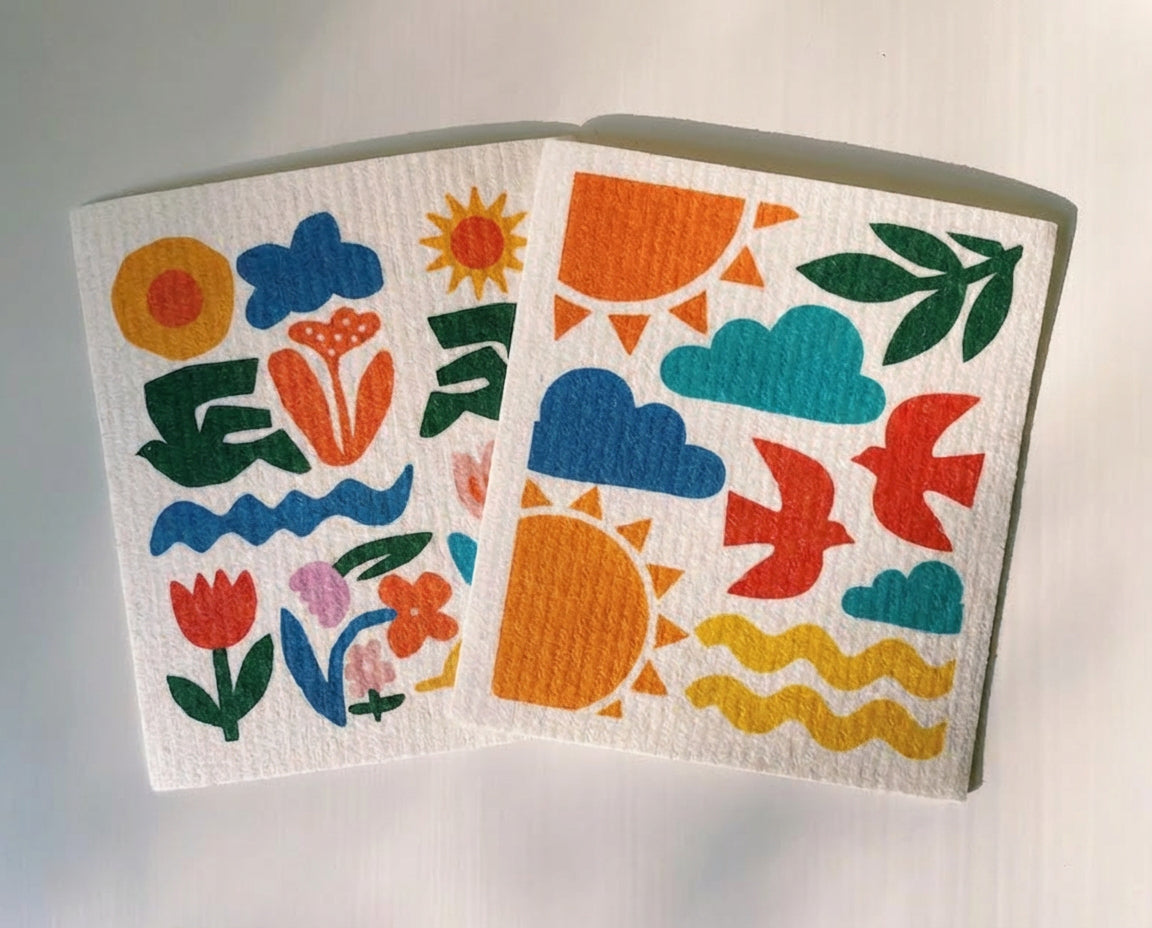
The Swedish dishcloth has moved beyond a simple household cleaning item. Its combination of reusability, absorbency, compact size, and printable surface makes it increasingly relevant to homeware brands, retailers, and promotional-product businesses. Looking toward 2027, the strongest opportunities are likely to center on sustainable materials, multifunctional designs, customization, and more transparent product information.
For buyers sourcing a swedish dishcloth manufacturer, understanding these trends can help guide product development and sourcing decisions.
Sustainability Will Become More Specific
Sustainability is expected to remain a major consideration, but buyers are likely to look beyond broad claims such as “eco-friendly.” Material composition, sourcing, durability, recyclability, and end-of-life options can all affect how sustainable a textile product actually is.
This wider focus reflects developments across the textile industry. Textile Exchange reported that global fiber production reached approximately 132 million tonnes in 2024, while recycled fibers accounted for about 7.6% of global fiber production, with fibers recycled from textile waste representing less than 1%. The organization also highlighted growing use of recognized certification programs and greater attention to material impacts.
For dishcloth suppliers, clearer material information and credible sustainability documentation are therefore likely to become increasingly important.
Reusable Performance Will Matter More
The appeal of Swedish dishcloths is closely connected to repeated use. Unlike disposable paper towels, these absorbent dish towels can be rinsed and washed, making durability and drying performance important parts of the purchasing decision.
Traditional Swedish dishcloths are commonly associated with cellulose and cotton construction, and their thin sponge-cloth format allows them to absorb substantial amounts of liquid while drying relatively quickly. These characteristics have helped establish them as an alternative to conventional disposable cleaning products.
In 2027, buyers are likely to pay closer attention to measurable performance rather than relying on marketing descriptions such as “super absorbent.”
Custom Printing Will Support Brand Differentiation
A functional cleaning product can also become a branding surface. Custom artwork, patterns, colors, or logos allow businesses to connect everyday household products with a recognizable visual identity.
This trend is already visible in the market. Swedish dishcloths have developed into design products as well as cleaning tools, with printed versions used for promotional campaigns, retail products, and branded merchandise.
For retailers and smaller brands, customization can make a relatively simple product more distinctive. It can also support seasonal collections, coordinated kitchen ranges, corporate gifts, or private-label programs without requiring a new product category.
Multifunctional Use Will Expand
Consumers increasingly expect household products to perform more than one basic task. Swedish dishcloths are well suited to this direction because their lightweight format can be used across different surfaces and cleaning situations.
The current product information describes applications including dishes, glassware, kitchen counters, sinks, spills, household cleaning, and floors. This multifunctional positioning gives manufacturers room to develop different versions around particular cleaning needs rather than treating every dishcloth as interchangeable.
Product descriptions that clearly explain intended applications may therefore become more important for both retail and wholesale buyers.
Smaller Custom Orders Will Stay Relevant
Product development does not always begin with a large-scale production run. Small brands may need limited quantities to test a new pattern, evaluate customer interest, or develop a seasonal product. Testing an absorbent dish towel in small batches can help confirm absorbency, drying speed, and print quality before committing to a larger order.
Low minimum order quantities can make this type of testing more manageable. On the product page, Bulijojo lists a starting minimum order quantity (MOQ) of 200 pieces and allows buyers to specify factors such as size, material, fabric weight, quantity, and custom artwork.
The same page states that production typically takes 7–15 working days after final design approval and deposit payment, although the final schedule depends on order quantity and customization complexity.
Better Artwork and Product Personalisation
As printed dishcloths become more design-oriented, artwork quality will become increasingly important. A small-format textile does not provide the same visual space as a poster or large fabric panel, so graphics need to remain clear at the final size.
Current production guidance supports digital files such as AI, EPS, PSD, and PNG, with vector artwork preferred for print quality. Buyers can also use production dielines to prepare designs before submitting them.
This points toward a more collaborative manufacturing process in which suppliers help buyers move from a concept to a production-ready design.
What Should Buyers Look for in 2027?
The strongest products are unlikely to succeed through sustainability claims or attractive printing alone. Buyers should evaluate the complete package: material, absorbency, drying performance, washability, design quality, customization options, minimum order quantity, and production requirements.
Household cleaning, retail kitchen sets, and branded gifts are the use cases Bulijojo highlights for its Swedish dishcloths. Its product range includes customizable sponge cloth options using digital or screen printing, with reusable positioning and multiple applications.
For businesses planning their next product line, choosing a Swedish dishcloth manufacturer should therefore involve both performance evaluation and careful consideration of how the finished product will fit the target market. The 2027 opportunity is not simply to make another dishcloth, but to create a reusable textile product with clear functionality, credible material information, and a design customers want to keep using.
