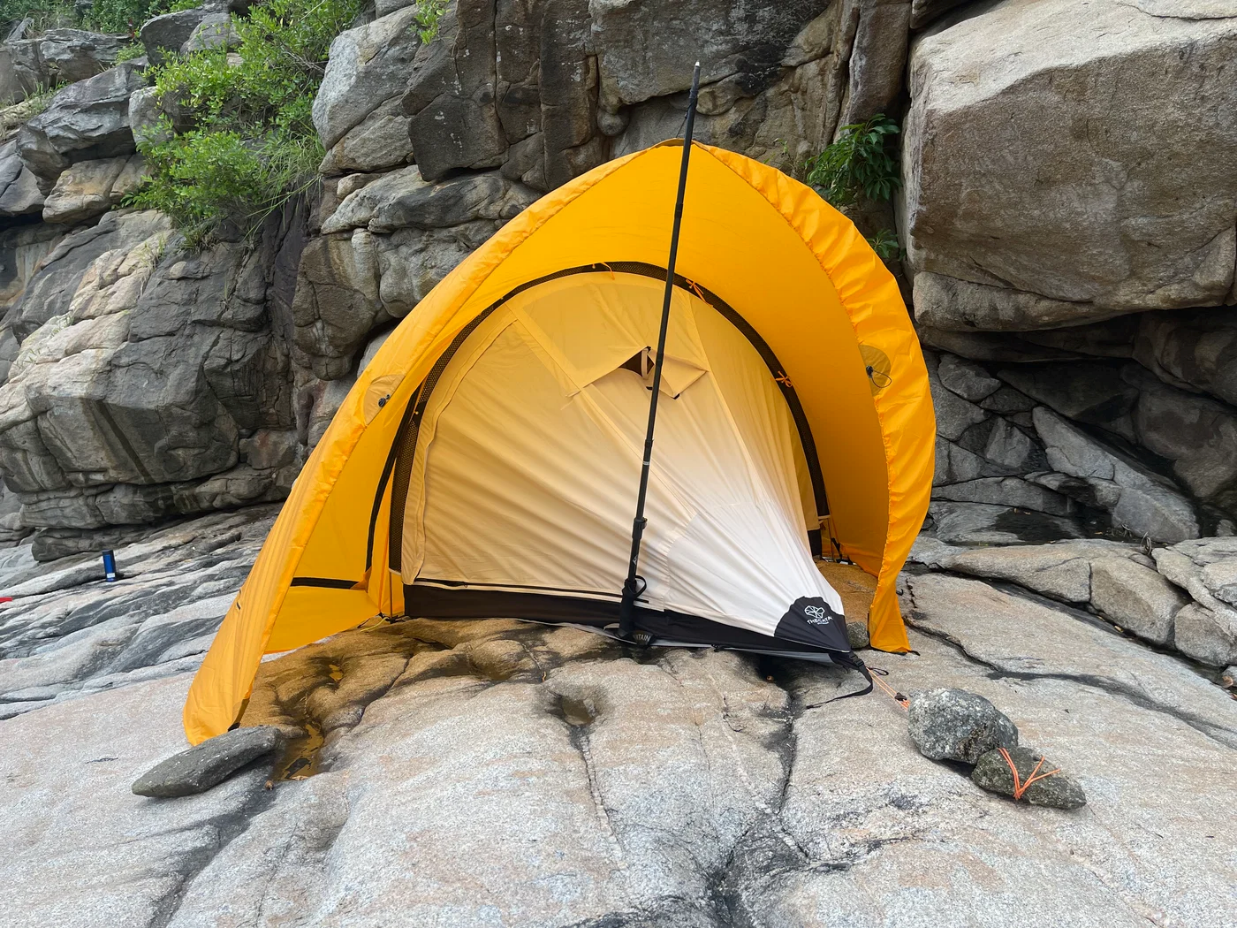
Car camping and hiking both involve spending time outdoors, but the equipment requirements are shaped by very different conditions. Car campers can transport most of their gear by vehicle, so size and comfort often take priority. Hikers must carry their equipment for hours or days, making weight, packed dimensions, durability, and setup efficiency much more important. These differences are especially clear when comparing large car camping shelters with lightweight hiking tents.
Car Camping Gear Prioritizes Space and Convenience
The defining feature of car camping is easy transportation. Once a campsite is accessible by vehicle, campers can bring equipment that would be impractical to carry over a long trail. Larger tents, folding chairs, tables, coolers, cooking equipment, thicker sleeping pads, and additional storage systems can all become part of the setup.
For families and groups, tent capacity is often more important than minimum weight. A larger shelter may provide space for multiple occupants, luggage, clothing, and other camping supplies. Extra headroom and wider entrances can also make spending several nights at one campsite more comfortable.
Car camping gear therefore tends to be evaluated around convenience. A heavier tent is not necessarily a disadvantage when it only needs to be transported a short distance from the vehicle. The same weight, however, can become a serious consideration on a long hiking route.
Hiking Equipment Is Built Around Carrying Efficiency
Hiking changes the equation because the user becomes the transportation system. Every item placed inside a backpack contributes to the total load, including shelter, poles, stakes, sleeping equipment, food, water, and clothing.
That makes a hiking tent ultralight particularly relevant for backpacking-oriented users. The goal is not simply to reduce weight, but to achieve an appropriate balance between portability and outdoor performance.
THECATAL’s Wind Anchor provides a useful example. According to its current product information, the standalone Wind Anchor weighs 850g, while the Wind Anchor Pro reduces the tent weight to 650g. The FAQ lists a standard setup at 982g for the Wind Anchor and 782g for the Pro version, showing that users can select different configurations according to how aggressively they want to reduce their pack weight.
Materials Make a Difference in Lightweight Shelters
Material selection is another major distinction between vehicle-supported and backpacking equipment. A car camping tent has more freedom to use heavier fabrics and components because the shelter is transported primarily by vehicle. Lightweight hiking shelters need a much stronger relationship between material performance and weight.
The Wind Anchor uses silicone-coated nylon, with the standard version specified as 20D and the Pro version using 10D double-sided silicone-coated ripstop nylon. The Pro configuration therefore provides a lower-weight option while retaining the product’s structural and weather-oriented design features.
This type of specification is particularly useful for outdoor retailers and distributors. Rather than relying only on general terms such as “lightweight,” buyers can compare denier, coating construction, overall weight, and intended use when deciding whether a tent fits a backpacking-oriented product range.
Wind Protection Matters on Hiking Routes
Weather exposure is not exclusive to hiking, but hikers may have fewer opportunities to move to a protected location once conditions deteriorate. A shelter therefore needs to combine low weight with a practical structural design.
The Wind Anchor uses THECATAL’s UADAS, or UniArc DualAnchor Shell Structure. Its single-arch, dual-anchor configuration uses a streamlined twin-one form intended to improve stability and reduce wind resistance. The official product information states that the tent can withstand winds up to Beaufort scale 12.
This design demonstrates why lightweight equipment should not be judged by weight alone. A shelter that saves several hundred grams but performs poorly in exposed conditions may not provide the overall value expected by experienced hikers. Structural stability, pitching methods, and weather protection all need to be considered alongside the number shown on the scale.
Waterproofing and Ventilation Serve Different Needs
A tent’s waterproof specifications can also influence its suitability for different outdoor activities. The Wind Anchor is listed with a 5,000mm waterproof rating, while its flysheet can be used to create a 2.5-layer waterproof configuration. The product also incorporates a reverse-flow ventilation system and a 360° Spoiler Window System intended to maintain airflow and reduce condensation.
These features illustrate the difference between simply having shelter and carrying shelter engineered for repeated use in variable conditions. For backpackers, moisture management is particularly important because damp sleeping equipment adds discomfort and can increase the burden of carrying gear.
Car campers may also value waterproofing and ventilation, but they generally have greater flexibility in choosing campsite locations and transporting additional comfort-oriented equipment. Hiking equipment has less room for such redundancy, so each component needs to perform an identifiable function.
One-Person Tents Emphasize Minimalist Packing
Capacity is another clear dividing line. Car campers often benefit from larger shelters because vehicle transport makes additional volume relatively easy to manage. Solo hikers have a different priority: carrying only the shelter space they actually need.
A ultralight 1p tent is therefore suited to a different type of outdoor journey. Wind Anchor’s lightweight configurations are aimed at hikers and backpackers, and its design allows both freestanding and non-freestanding setups. The structure also includes an openable storage compartment for organizing equipment separately from the sleeping area.
For product buyers, this distinction is useful when building a segmented outdoor assortment. A one-person lightweight shelter can serve solo trekking customers, while larger car camping tents can address family and group-oriented demand.
Choosing Gear According to the Outdoor Scenario
The difference between car camping gear and hiking equipment ultimately comes down to priorities. Vehicle-supported camping allows users to favor larger dimensions, greater comfort, and more accessories. Hiking requires a much tighter balance between carrying weight, structural performance, weather protection, and packability.
For retailers, distributors, and other outdoor businesses, product positioning becomes clearer when these use cases are separated. THECATALprovides lightweight hiking tents as a dedicated product category, with Wind Anchor models offering measurable specifications such as 650g Pro weight, 20D or 10D materials, a 5,000mm waterproof rating, and flexible setup configurations.
Match the Equipment to the Journey
Neither car camping gear nor hiking equipment is universally better. The right choice depends on how the equipment will be transported, how many people will use it, expected weather conditions, and how much weight the user is prepared to carry. Starting with those practical requirements makes it easier to select equipment that performs well not only at the campsite, but throughout the entire trip.
