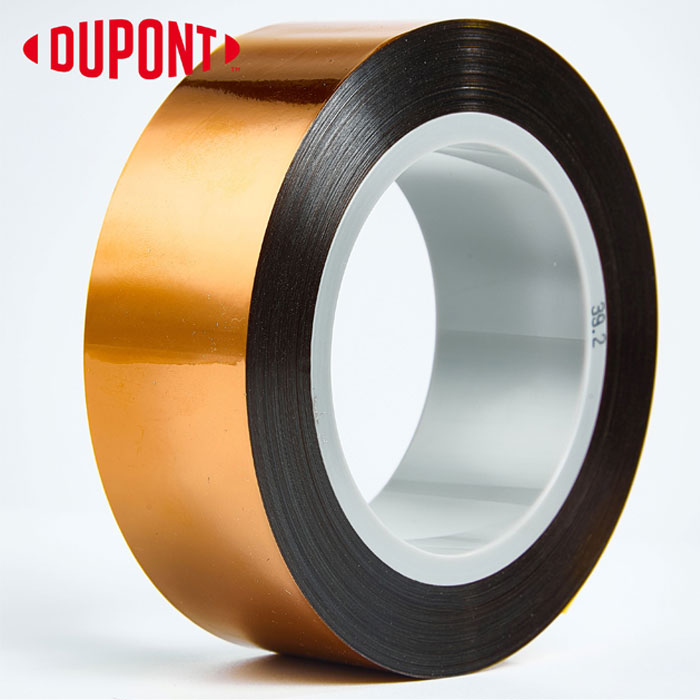
In electric vehicle (EV) design, material choices for cell packaging, module insulation, and thermal management directly affect safety, reliability, and manufacturability. Each material selected for an EV battery system contributes to electrical isolation, thermal resilience, mechanical stability, and regulatory compliance. Among high-performance films, Kapton® polyimide film is widely specified across the EV supply chain. The following article outlines five practical reasons procurement, engineering, and quality teams at OEMs and tier suppliers prioritize kapton film and kapton polyimide film when developing and scaling EV battery systems, noting supply considerations with distributors such as Sui On Insulating.
1. High thermal stability for elevated cell temperatures
Kapton polyimide film delivers sustained performance at elevated temperatures—typical service ranges span 200–240°C (product-dependent) and are supported by UL listings (e.g., E39505). In battery modules where localized heating, thermal runaway mitigation layers, or high-temperature manufacturing steps are present, kapton film maintains dielectric and mechanical properties where many polymer films would soften or degrade. For B2B buyers, this thermal margin reduces the risk of insulation failure during abuse conditions and during high-temperature processing, simplifying design validation.
2. Robust dielectric properties for compact, high-voltage architectures
Kapton film exhibits low dielectric loss, high breakdown strength, and stable electrical performance under cyclic thermal and electrical stress. In dense EV battery packs that incorporate high-voltage architectures and tight creepage and clearance constraints, kapton polyimide film supports thin, conformable insulation layers that preserve volume efficiency while maintaining required dielectric safety margins. Procurement teams can rely on documented UL and environmental certifications (RoHS, REACH, MSDS) to streamline supplier qualification.
3. Chemical and radiation resistance suited to battery environments
Battery packs encounter electrolytes, cleaning agents, and potential outgassing; kapton film resists many chemicals and retains mechanical and dielectric properties in aggressive environments better than many alternatives. This chemical robustness lowers contamination risk and extends operational life of insulation interfaces. For OEMs pursuing long service intervals and warranty reduction, material resilience against chemical exposure is a clear driver for specifying kapton film.
4. Mechanical durability and thin-form factor for manufacturability
Kapton polyimide film combines flexibility with tensile strength, enabling automated handling—die-cutting, lamination, and application in tight geometries—without compromising dimensional control. Its standard production widths (commonly 1000 mm) and availability in roll form facilitate high-throughput manufacturing. Suppliers that provide processing support and A4 sample kits, such as Sui On Insulating, help suppliers accelerate qualification and reduce assembly variability.
5. Proven supply chain maturity and certification support
DuPont Kapton® has an extensive track record and system-level certifications (ISO9001, ISO14001, IATF16949) that underpin consistent lot-to-lot quality. For EV OEMs and tier suppliers, sourcing kapton film from certified supply chains reduces procurement risk, shortens qualification timelines, and supports scalable production ramps. Reliable distributors and processors provide traceability, test reports, and sample material needed for electrical, thermal, and environmental validation.
Final recommendation: Specify kapton film where reliability and safety are non‑negotiable
For EV battery systems, kapton polyimide film addresses critical needs—thermal endurance, dielectric reliability, chemical resistance, manufacturability, and certified supply. Engineering and procurement teams should specify kapton film in applications that demand thin, high-performance insulation and work with qualified suppliers and processors—such as Sui On Insulating—to ensure traceable, production-ready material supply and to support predictable validation and scale-up.
