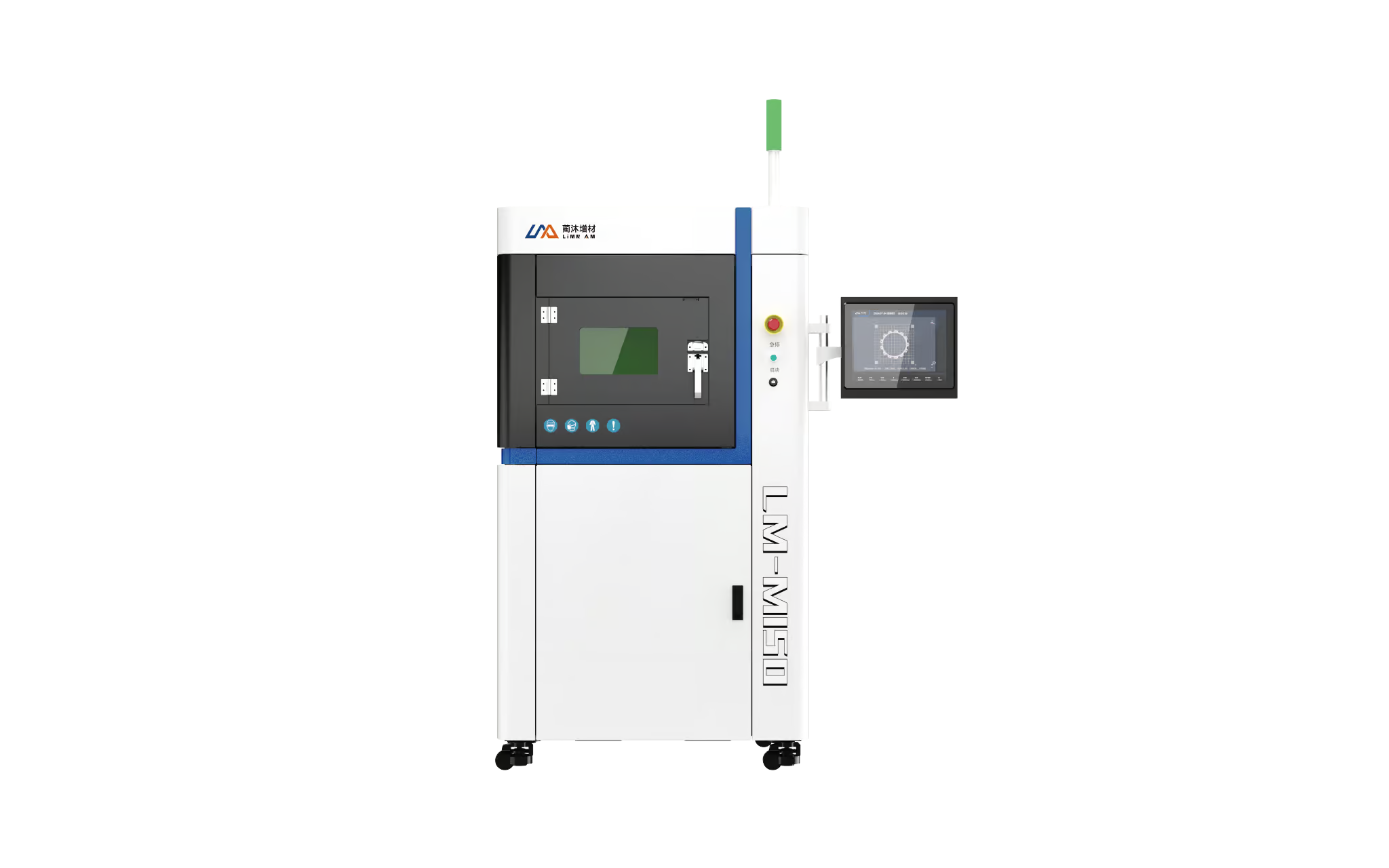
For engineering teams, choosing a metal additive manufacturing system for prototyping is not simply a matter of finding the smallest machine available. R&D departments need equipment that balances part complexity, dimensional accuracy, process control, installation requirements, and operating efficiency. LiMN 3D positions its metal additive manufacturing equipment for applications including aerospace, automotive, consumer electronics, mold manufacturing, medical and dental work, and research and academia.
What Should Buyers Look for in 3D Metal Printers?
A suitable machine for prototyping should support more than basic metal part production. The printing process needs to produce consistent results while allowing engineers to test different geometries, structures, and design concepts without committing to conventional tooling.
Metal powder bed melting is particularly relevant for R&D because it selectively melts fine metal powder layer by layer using a high-precision laser. This approach enables the production of complex metal geometries directly from digital designs, making it useful when conventional machining or tooling would restrict design freedom.
For business buyers, machine size should also be considered alongside the intended application. A compact system can be practical when the primary workload consists of small prototypes, laboratory development, design validation, or limited-batch components. Larger systems may be more appropriate when production volume or part dimensions increase.
Why the LiMN 3D LM-M150 Fits Prototype Development
The LiMN 3D LM-M150 is positioned as a compact metal additive manufacturing option within the company’s product range. According to LiMN 3D’s official product information, the machine has overall dimensions of 960 × 730 × 1788 mm, a layer thickness range of 20–120 μm, and power consumption of 380 V, 34 kW.
These specifications are relevant when an R&D department has limited floor space but still requires a dedicated metal printing system. Its stated layer thickness range provides flexibility for development work where engineers may need to balance surface detail, build requirements, and productivity according to the part being tested.
The LM-M150 is also presented alongside LiMN 3D’s prototype development services. The company’s R&D approach emphasizes precise laser parameter control, temperature management, and material parameter adjustments to improve printing accuracy and production efficiency. Such process considerations are important because machine hardware alone does not determine the quality of a metal prototype.
A 3D Printer That Prints Metal Needs Process Support
When evaluating a 3D printer that prints metal, buyers should look beyond the equipment’s headline specifications. Metal powder bed processes involve material preparation, parameter selection, build strategy, post-processing, and quality verification. R&D teams therefore benefit from suppliers that can support the complete development workflow.
LiMN 3D states that its engineers help customers select suitable solutions according to part complexity, material, and production requirements. The company also provides installation and maintenance support, training, and prototype development services.
This support can be particularly useful for companies adopting metal additive manufacturing for the first time. Instead of treating the printer as an isolated piece of equipment, buyers can evaluate whether the supplier can assist with process optimization and practical implementation.
Where Small Metal 3D Printers Add Value in R&D
A compact metal printing system can support several stages of product development. Engineers can use printed components to evaluate form, assembly, functional geometry, and design changes before moving toward larger-scale manufacturing.
LiMN 3D identifies research and academia as an application area and describes metal 3D printing as suitable for producing complex models and prototypes for experimental research and design validation. Its broader application portfolio also includes aerospace, automotive, consumer electronics, heat exchangers, and mold manufacturing.
The technology can therefore be valuable when a development team needs to investigate geometries that are difficult or expensive to manufacture conventionally. Heat-dissipation structures, complex channels, lightweight components, and customized parts are examples of applications shown by LiMN 3D.
Comparing the LM-M150 with Larger Systems
The question of which machine is best depends heavily on the intended workload. LiMN 3D’s portfolio includes the LM-M100D Lite, LM-M120D Lite, LM-M150, LM-M280, LM-M400, and LM-M800. The published specifications show that the larger models increase substantially in physical size and power requirements.
For example, the LM-M280 is listed at 2536 × 1270 × 2230 mm with 20–120 μm layer thickness and 380 V, 34 kW consumption. The LM-M400 measures 3440 × 1270 × 2500 mm and is listed at 380 V, 34 kW, while the LM-M800 measures 6584 × 3780 × 4200 mm and is listed at 380 V, 34 kW.
For R&D teams focused on smaller prototypes, the LM-M150 can therefore be evaluated as a more compact option within the same product family. Its suitability should still be determined by the required part envelope, materials, throughput, and development objectives rather than machine size alone.
Choosing the Right Platform for Product Development
The best small metal 3D printer for a particular business is ultimately the one that aligns with its development workflow. Buyers should assess available installation space, prototype dimensions, required layer thickness, material compatibility, expected workload, process support, and future production plans.
LiMN 3D combines metal additive manufacturing equipment with prototype development, training, installation, and maintenance services. Its broader portfolio allows companies to consider a smaller platform for R&D while retaining a potential path toward larger systems as production requirements grow.
For companies searching for 3D metal printers that prints metal for engineering development, the LM-M150 provides a practical platform to evaluate against specific project requirements. Its compact published dimensions, 20–120 μm layer thickness range, and 380 V, 34 kW power specification make it a relevant candidate for organizations seeking dedicated metal additive manufacturing capabilities without immediately moving to a large industrial system.
A Practical Starting Point for Metal R&D
Selecting metal printing equipment should begin with the prototype rather than the machine label. By matching part complexity, material requirements, workspace, process objectives, and expected development volume, engineering teams can make a more informed investment. LiMN 3D’s LM-M150 offers a compact option within its broader SLM metal additive manufacturing portfolio, while its engineering and support services address the process requirements that accompany metal prototype development.
