Transitioning from high-flow nasal cannula therapy to non-invasive ventilation is a clinical escalation, not merely an equipment change. HFNC can deliver a high flow of heated, humidified oxygen-air mixture, reduce entrainment of room air, flush upper-airway dead space, and improve comfort in hypoxemic patients.
NIV adds inspiratory and expiratory pressure support, making it more suitable when respiratory-muscle fatigue, hypercapnia, or increased work of breathing becomes dominant. During this transition, a medical ventilator must allow the team to compare the patient’s response before and after the change without losing sight of the underlying disease.
Assessment brings together respiratory rate, oxygen requirement, SpO₂, work of breathing, mental status, blood gases, hemodynamics, and tolerance; no single measure is sufficient. Delaying NIV in an appropriate patient may permit fatigue to progress, while applying it to someone who cannot protect the airway or manage secretions can create avoidable risk.
Clinical efficiency therefore means selecting the right therapy promptly, performing a structured reassessment, and escalating to invasive support when a medical ventilator strategy does not meet predefined goals.
Before the switch, a checklist can assign responsibility for mask placement, parameter entry, blood-gas timing, documentation, and airway backup, reducing confusion while tolerance and physiological response are first assessed. Prepared roles allow the team to focus attention on the patient’s immediate response.
Recognize When High Flow Is No Longer Enough
An hfnc machine can remain effective when oxygenation improves, respiratory effort falls, and the patient stays alert and comfortable. Warning signs include a rising oxygen requirement, persistent tachypnea, worsening accessory-muscle use, deteriorating gas exchange, unstable circulation, or declining consciousness.
Indices such as ROX can organize trends, but no threshold should overrule obvious clinical deterioration. The decision to move to NIV should also consider the diagnosis: hypercapnic chronic obstructive pulmonary disease (COPD) exacerbation and cardiogenic pulmonary edema have different evidence and pressure goals from de novo hypoxemic failure.
Before changing modes, staff should explain the mask, select an interface, prepare skin protection, clear secretions, and establish alarm and escalation criteria. The hfnc machine may be retained for breaks if the protocol permits, but frequent switching should not mask failure of the primary strategy.
Efficiency improves when the team anticipates the transition, has the correct circuit ready, and documents the reason for escalation instead of waiting for a crisis that makes mask adaptation more difficult.
Comfort measures such as humidification, reassurance, positioning, short coaching sessions, and careful strap adjustment can improve tolerance, but sedation requires particular caution because it may impair airway protection or obscure clinical decline. Tolerance strategies should not conceal progressive fatigue or delayed airway protection.
One Platform Can Preserve Monitoring Continuity
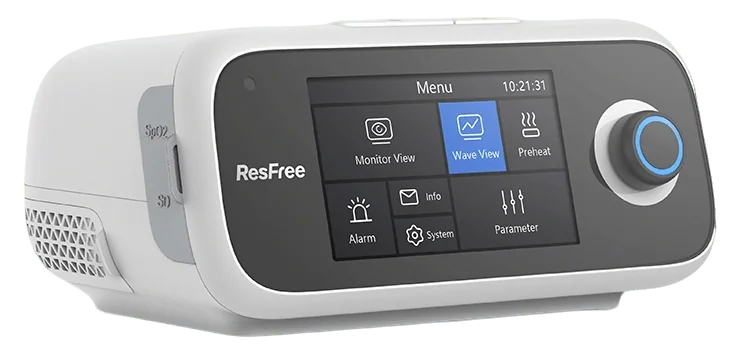
Beyond’s ResAero series is that HFNC, NIV, and synchronized nebulization share one clinical platform. For HFNC, the system supplies a heated and humidified stream at up to 80 L/min.
Its NIV side uses CPAP, S, T, S/T, and APCV modes with bilevel pressure and leakage compensation. For comparison before and after the switch, Beyond places respiratory mechanics, ventilation, leakage, oxygenation, pulse rate, and ROX and VOX trends on the same 10.1-inch screen.
Using the ROX index and oxygen saturation as inputs, the AI-assisted high-flow function modifies delivery within its configured range. Once NIV begins, proximal pressure sensing and real-time waveforms give a closer view of patient–machine coordination. Built-in oxygen blending, dual oxygen-source compatibility, and humidification reduce dependence on separate external modules.
A shared monitoring platform can make pre- and post-transition data easier to interpret. The bedside team still confirms sensors, interfaces, oxygen supply, and alarms after each mode change, preserving continuity without surrendering clinical control.
Continuity is most valuable when timestamps and settings remain interpretable across modes, allowing the team to relate a physiological change to the therapy delivered rather than reconstruct events from separate displays and handwritten notes. Unified timestamps also strengthen audit trails and retrospective clinical review.
Measure the Transition as a Care Process
Hospitals can improve respiratory protocols by reviewing both outcomes and execution. Useful measures include time from documented failure criteria to NIV initiation, blood-gas response, changes in respiratory rate and oxygen demand, mask tolerance, skin injury, unplanned intubation, ICU length of stay, and adherence to reassessment intervals.
Cases should be stratified by diagnosis and severity because pooled numbers may hide where a pathway works well or poorly. Simulation can train nurses, respiratory therapists, and physicians to coordinate interface selection, setting changes, secretion management, aerosol delivery, and preparation for intubation.
Standard order sets should leave room for individualized targets rather than encourage automatic settings. The team also needs a plan for de-escalation: improvement may allow a return to high flow or conventional oxygen, while repeated dependence on pressure support may signal incomplete recovery.
Efficient transition does not mean avoiding intubation at all costs. It means giving an appropriate non-invasive strategy a well-monitored trial, recognizing success early, and ending the trial promptly when the patient needs a protected airway and invasive support.
Regular case review can refine failure thresholds for local populations and resources, while preserving the principle that protocol performance should be judged by timely, appropriate decisions rather than by the percentage of patients kept off invasive support. This distinction keeps quality improvement centered on appropriate respiratory support.
