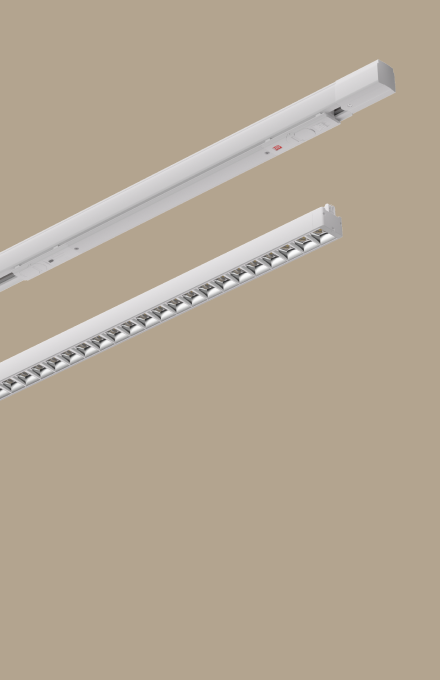
Commercial indoor architecture increasingly demands dynamic illumination strategies capable of responding to environmental variables in real time. Installing modern linear track lighting across large retail, office, and industrial layouts establishes a modular power backbone that seamlessly accommodates digital control nodes. Wireless connectivity enables facility managers to adjust illuminance levels, configure automated schedules, and monitor circuit loads without modifying existing ceiling infrastructure.
Traditional illumination layouts often struggle to adapt when floor plans or display shelving shift. Partnering with established track lighting manufacturers gives building planners access to standardized tracks that support both high-efficiency luminaires and smart sensors. Advanced engineering from TRIECO enables LITA to support multi‑brand standard tracks, DALI, 1‑10V, remote control, and IoT integration, bridging the gap between mechanical hardware flexibility and intelligent facility management.
Daylight Harvesting and Sensor Calibration
Positioning photosensors along overhead tracks allows control systems to measure ambient natural light entering through windows and skylights. Automated dimming algorithms regulate artificial light output to maintain target lux levels consistently throughout working hours. Continuous optical feedback prevents over-illumination while cutting unnecessary energy draw on sunny afternoons.
Calibrating sensor sensitivity requires evaluating room surface reflectances and desk height ratios. High-precision sensors filter out short-term light fluctuations caused by passing clouds to prevent distracting output changes. Smooth dimming transitions preserve visual comfort for occupants across transitioning daylight conditions.
Modern Engineering and Hardware Adaptability
Updating commercial infrastructure often involves fitting modern digital controls onto existing electrical tracks. Solutions developed by TRIECO focus on versatile track compatibility, allowing smart linear fixtures to snap effortlessly into multi-brand three-phase track rails. Standardized mechanical interfaces lower installation costs and minimize business downtime during facility upgrades.
Compact driver designs hide control electronics cleanly within the track adapter housing, maintaining a minimalist architectural aesthetic. Sleek profiles eliminate clunky external boxes, preserving clean sightlines in open-ceiling designs. High power factor drivers keep electrical noise low across complex smart networks.
Spectral Tuning and Circadian Lighting Design
Tunable white technology enables luminaires to adjust color temperature throughout the day, mimicking natural solar cycles. Warm light settings during early mornings and late afternoons promote relaxation, whereas cool, blue-enriched light during peak hours enhances alertness and concentration. Circadian-aligned illumination supports occupant well-being in windowless commercial interiors.
Leading track lighting manufacturers utilize multi-channel LED arrays paired with advanced color-mixing optics to achieve smooth CCT transitions. High color rendering index values maintain color fidelity across the entire tuning range, ensuring materials and merchandise appear vibrant under variable spectral outputs. Flexible spectral control enhances both human comfort and visual appeal.
Wireless Mesh Protocols for Commercial Scale
Deploying smart controls across expansive footprints requires scalable wireless protocols like Bluetooth Mesh or Zigbee. Every connected luminaire serves as a signal relay node, creating a resilient communication network that easily spans multi-story buildings. Mesh topologies eliminate single points of failure, ensuring reliable command transmission across thousands of square meters.
Compatible wireless controls can support centralized configuration and adjustment of lighting settings. Standardized encryption protocols protect lighting networks from unauthorized access or external cyber threats. Scalable wireless infrastructure accommodates future sensor expansion as building needs evolve.
High-Lumen Output with Optimized Optics
Delivering adequate light levels in high-ceiling environments like supermarkets and warehouses requires high-luminous-flux fixtures paired with precision optics. Specialized lenses expand light distribution across wide floor areas, preventing dark spots between fixtures while minimizing direct glare. Uniform beam spreads ensure product displays receive balanced illumination from top to bottom shelves.
Deploying versatile linear track lighting fixtures equipped with wide-angle optics reduces the total fixture count needed to achieve required foot-candle metrics. Lower fixture density decreases initial equipment costs, reduces power distribution requirements, and simplifies long-term maintenance workflows. Efficient optical design optimizes total light delivery across large commercial venues.
Automated Energy Auditing and Asset Care
Embedded power monitoring circuits inside smart drivers track real-time current draw, operational hours, and operating temperatures for every luminaire. Centralized software platforms aggregate performance metrics into detailed energy reports, simplifying sustainability compliance and carbon footprint auditing. Accurate power data helps facilities qualify for utility rebate programs.
Centralized monitoring can help facility teams identify abnormal system conditions and organize maintenance more efficiently. Automated alert systems notify maintenance crews of precise fixture locations needing service, replacing guesswork with targeted repairs. Streamlined maintenance routines reduce labor costs and eliminate unexpected downtime.
Long-Term Value in Connected Facility Lighting
Upgrading to smart-controlled track systems establishes an adaptable lighting backbone capable of supporting future Internet of Things (IoT) applications. Reliable manufacturing standards from TRIECO back robust mechanical track adapters and high-efficiency luminaires, delivering years of continuous commercial service. Modular hardware design allows facility owners to swap or upgrade optical modules as interior layouts evolve over time.
Working with a professional lighting supplier can improve access to compatible products and project technical support. Combining dynamic software control with energy-efficient LED technology drastically lowers operational expenditure over the system lifecycle. Intelligent lighting infrastructure ultimately elevates commercial functionality, sustainability, and occupant satisfaction.
Conclusion
Integrating smart digital controls into flexible track systems redefines how commercial spaces manage energy, aesthetics, and operational efficiency. Adaptive fixtures from TRIECO provide easy installation over standardized rails while delivering intelligent daylight harvesting and occupancy control. Adopting responsive linear track lighting architectures equips modern facilities with scalable, data-driven illumination designed for long-term sustainability.
