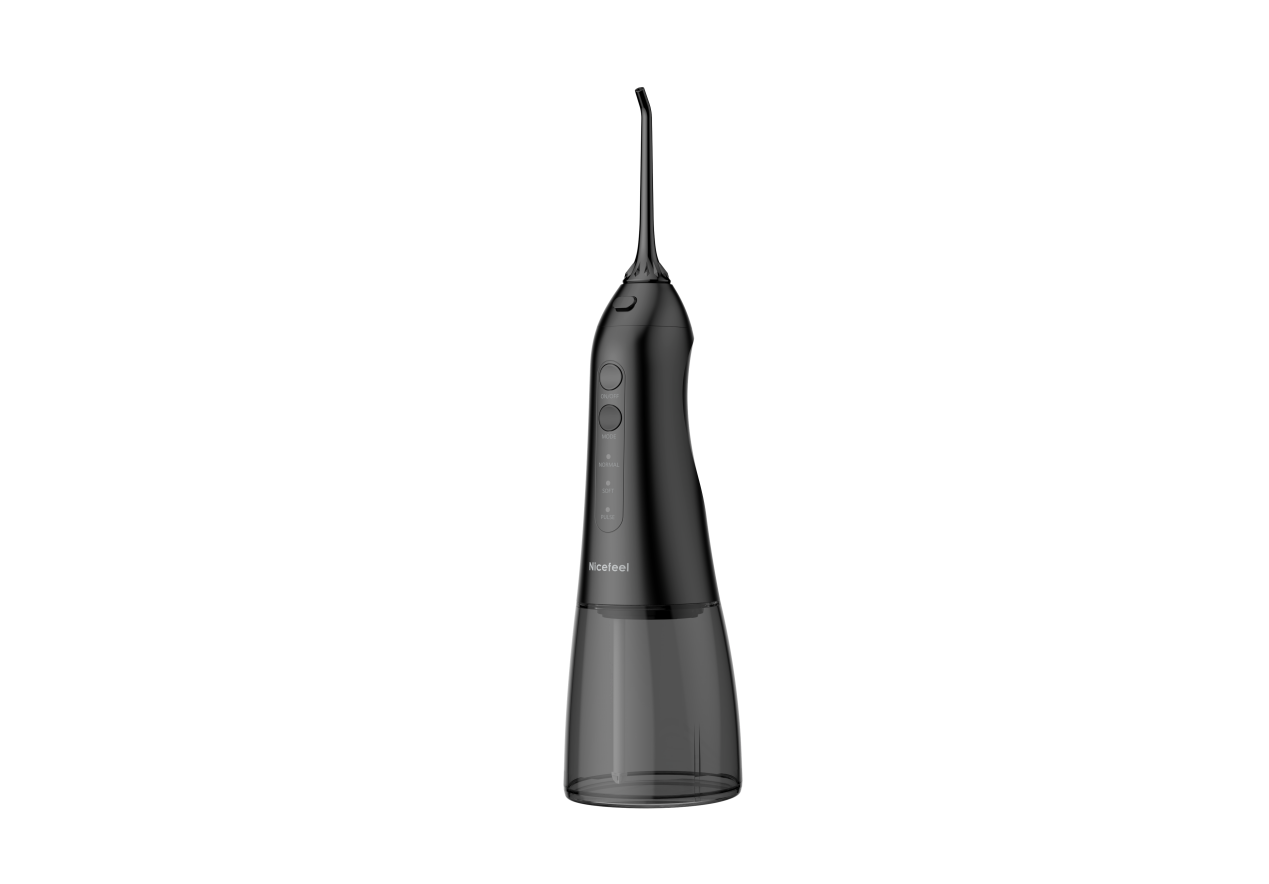
A compact water flosser can make interdental cleaning easier for users who want cordless operation without giving up useful controls. The American Dental Association recognizes water flossers as powered interdental cleaners that can help remove food debris and plaque between teeth and along hard-to-reach areas. For buyers, a smaller body is only valuable when the specifications still support practical everyday use.
Start With Size and Weight
Portability begins with physical design. Check dimensions as well as net weight, because a device that is technically compact may still feel bulky during daily handling. Dimensions also determine whether it fits easily into a bathroom cabinet, travel bag, or small countertop.
For a handheld water flosser, ergonomics are closely connected to size. A curved grip, accessible controls, and balanced construction can make repeated use easier. Compare body shape and weight together instead of choosing only the smallest specification on the sheet.
Check Water Tank Capacity
Reservoir capacity creates an important trade-off. A larger tank can reduce refill frequency, while a smaller tank can help keep the overall product compact. The right capacity depends on whether the priority is home convenience, portability, or a balance between both.
A current handheld range includes 280mL and 300mL tank configurations, giving buyers options for different use scenarios. For a compact water flosser, tank capacity should be considered alongside body dimensions rather than evaluated alone.
Compare Pressure Range Carefully
Pressure specifications deserve attention because users may prefer different settings. A broad range can provide greater flexibility, but the maximum PSI should not be treated as a direct measure of overall quality. Users should follow product instructions and choose a comfortable setting.
Current handheld models span several pressure configurations, including ranges such as 21–110 PSI, 21–115 PSI, and DIY adjustment from 20–130 PSI. These differences help buyers compare how much control a model provides and whether its pressure system fits the intended market.
Look at Modes and Controls
Operating modes can matter as much as pressure range. Standard, soft, pulse, or customizable modes can give users more control. Simple one-button switching can also reduce the learning curve for people who prefer straightforward settings.
For a handheld water flosser intended for frequent use, control placement should be reviewed with the mode structure. A product can have many settings but still be inconvenient if switching takes multiple steps. Clear indicators and an intuitive interface can make a bigger practical difference than a long feature list.
Review Battery and Charging Specifications
Cordless operation is one reason compact devices appeal to travelers and space-conscious users. Battery capacity, charging time, charging interface, and expected usage should therefore be compared together. A larger battery can be useful, but runtime also depends on pressure, motor performance, and session duration.
Consider Waterproofing and Cleaning
Waterproofing is relevant for an oral-care device used around a sink. A stated IP rating provides a defined level of protection, but buyers should still check manufacturer instructions for cleaning and charging. Removable reservoirs and accessible components can also simplify maintenance.
The ADA recommends daily interdental cleaning and identifies water flossers among powered interdental-cleaning options. It also notes that evidence for oral irrigators has limitations, so product claims should remain specific and supported rather than suggesting that one method is universally superior.
Check Noise and Handling Comfort
Noise can affect whether users enjoy a device as part of their routine. For shared bathrooms or early-morning use, a lower stated noise level may be valuable. Weight and grip comfort should be considered at the same time because users hold the device during the cleaning session.
Flycat lists noise specifications for its handheld products, with several current models rated at or below 72dB. Their FC5600 combines a 300mL tank with a 244g body, three modes, and IPX7 waterproofing, showing how portability involves several specifications working together.
Think About the Whole Product Package
For buyers, the most useful comparison is rarely one headline number. A compact water flosser should be evaluated as a complete package covering dimensions, weight, tank capacity, pressure, modes, battery, charging, waterproofing, and accessories. Checking these factors can reveal whether a product is truly designed around portable use.
Flycat offers multiple handheld water flosser configurations for oral-care brands and distributors. Their category page highlights OEM/ODM services, ISO 9001 and ISO 13485 quality systems, more than 30 production lines, and stated daily output of up to 30,000 units. Commercial buyers should confirm exact model specifications and market requirements before ordering.
Final Buying Checklist
Before selecting a handheld water flosser, compare the specifications that directly affect everyday handling: overall size, weight, water capacity, pressure range, modes, battery capacity, charging time, waterproof rating, and noise. The right combination depends on intended users and whether the product is designed mainly for home, travel, or both.
Flycat’s FC5570 is listed at approximately 241g with a 300mL tank, three working modes, 21–115 PSI impact pressure, a 1200mAh battery, charging of no more than four hours, and IPX7 waterproofing. Reviewing these details together gives buyers a clearer basis for comparing a compact water flosser.
