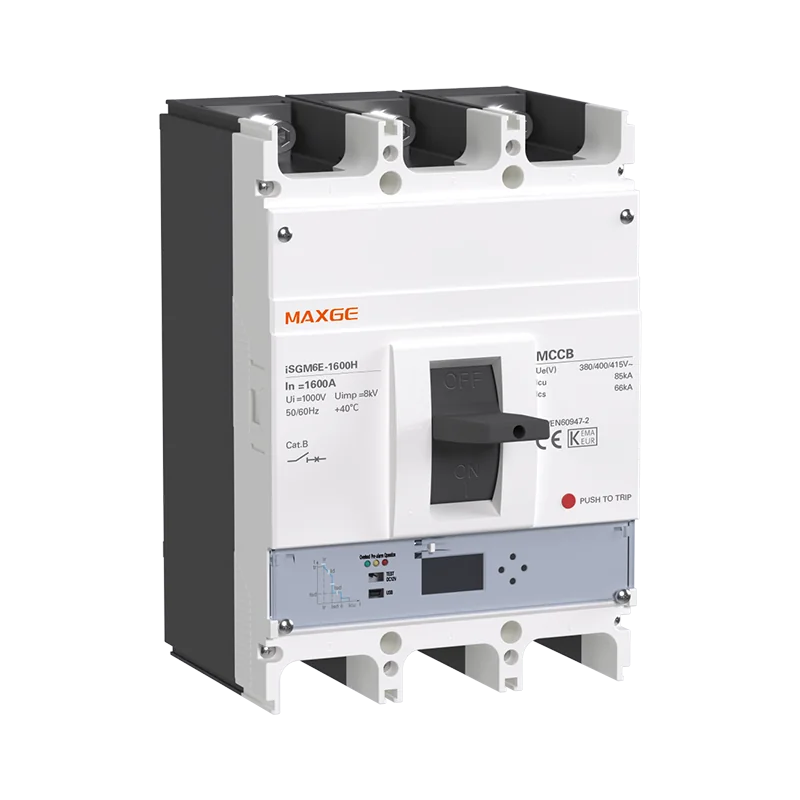
When a facility expands, its electrical system often has to handle more than it was originally designed for. New production equipment, additional HVAC loads, upgraded machinery, or increased power demand can gradually push an existing protection system closer to its limits. At that point, a familiar question comes up: is the current mould case circuit breaker (MCCB) still sufficient, or should the main circuit protection be upgraded to an air circuit breaker (ACB)?
The decision is not simply about choosing a breaker with a higher current rating. Load growth, short circuit capacity, protection coordination, maintenance requirements, available installation space, and future expansion all need to be considered. Understanding these factors can help engineers select the right electrical control products while avoiding unnecessary upgrades or inadequate protection.
Understanding the Difference Between MCCB and ACB
MCCBs and ACBs are both designed to protect electrical circuits from abnormal conditions, but they are typically used in different parts of a distribution system.
A mould case circuit breaker is commonly installed for feeder circuits, distribution panels, motors, and equipment protection. Its compact construction makes it practical where installation space is limited, while different frame sizes and trip configurations allow it to accommodate a range of electrical requirements.
An air circuit breaker is generally used for higher current applications, particularly as a main breaker in low voltage distribution systems. A low voltage air circuit breaker can provide higher current capacity and more adjustable protection functions, making it suitable for main switchboards and facilities with complex distribution networks.
For this reason, choosing between the two should start with the actual requirements of the electrical system rather than the assumption that one type is always better.
When an MCCB May Still Be Suitable
An existing MCCB does not necessarily need to be replaced simply because a facility has expanded. If its rated current, breaking capacity, protection settings, and installation conditions remain appropriate for the system, it may continue to provide reliable protection.
MCCB ratings are particularly important during this assessment. The rated current should correspond to the expected continuous load, while the breaker’s interrupting capacity must be suitable for the prospective fault current at its installation point.
Engineers should also consider whether the breaker is operating close to its limits. Frequent tripping, increased load demand, changes in downstream equipment, or difficulty achieving proper protection coordination may indicate that the existing configuration needs to be reviewed.
In facilities where distribution loads remain within the capabilities of the MCCB, replacing it with an ACB may offer limited practical benefit.
Signs That an ACB Upgrade May Be Needed
The need for an ACB often becomes more apparent as the main distribution system grows in capacity and complexity.
A significant increase in electrical demand is one of the clearest factors. New machinery, production lines, large HVAC systems, data infrastructure, or other high power equipment can increase the current flowing through the main distribution board. When the existing MCCB is approaching its practical capacity, an ACB may provide a more suitable solution for the main circuit.
Protection coordination can also influence the decision. As more feeders and loads are added, the relationship between the main breaker and downstream protection devices becomes increasingly important. An ACB can provide greater flexibility for protection settings, which may help engineers coordinate different levels of the distribution system.
Maintenance requirements are another consideration. In installations where regular inspection, testing, or replacement is necessary, an ACB with an appropriate configuration can make maintenance easier to manage. Draw out designs can be particularly useful in applications where minimizing downtime is an important operational consideration.
What Should Be Evaluated Before Upgrading?
Before replacing an MCCB with an ACB, engineers should evaluate the complete electrical distribution system rather than focusing only on breaker ratings.
The first consideration is current demand. Review both the facility’s present load and its expected future requirements. A breaker selected only for today’s demand may become inadequate if significant expansion is already planned.
The second consideration is short circuit performance. The protection device must have sufficient breaking capacity for the fault level at the installation point. This assessment should be based on the actual characteristics of the electrical system.
Protection coordination should also be reviewed. The main breaker needs to work effectively with downstream breakers so that a fault can be isolated without unnecessarily interrupting power to other parts of the facility.
Physical installation conditions should not be overlooked either. Switchboard dimensions, available space, connection arrangements, ventilation, and maintenance access can all affect whether an ACB can be installed without major modifications.
Selecting Electrical Control Products for Future Requirements
A circuit protection upgrade is an opportunity to consider not only current operating conditions but also the facility’s longer term electrical requirements. The objective is to establish a protection system that provides appropriate capacity while remaining practical to operate and maintain.
MAXGE offers a range of electrical control products covering different distribution and protection applications. Its product portfolio includes mould case circuit breakers, air circuit breakers, and other low voltage electrical equipment designed for various system requirements.
For facilities evaluating a transition from MCCB to ACB, the selection process should consider the complete application, including load characteristics, fault levels, protection coordination, installation conditions, and future expansion. This approach helps avoid selecting equipment based solely on nominal current ratings.
If you are reviewing an existing distribution system or planning a new electrical installation, you can contact MAXGE to discuss suitable protection solutions and product requirements.
Making the Right Choice for Main Circuit Protection
The choice between an MCCB and an ACB depends on the electrical demands, distribution structure, and operating conditions of the facility. An MCCB can be suitable for many feeder and distribution applications when its current, breaking capacity, and protection functions align with the circuit requirements. For main distribution systems with higher current demands or more complex protection and maintenance requirements, an ACB may provide functions better suited to the installation.
Rather than selecting a larger breaker simply because higher ratings are available, engineers can evaluate load growth, short-circuit levels, protection coordination, installation conditions, and future expansion together. This helps determine whether the existing protection arrangement remains appropriate or whether a different device is needed as the electrical system develops.
MAXGE provides low-voltage protection and control products for different levels of electrical distribution, with solutions extending from conventional distribution applications to PV, energy storage, renewable energy, and EV charging systems. Its product development is supported by R&D capabilities, automated manufacturing, and testing resources, helping address different technical and installation requirements.
For MCCB, ACB, or other electrical protection options, you can contact MAXGE through its official website to discuss product specifications and application requirements.
