Stainless steel enclosures and control panels must satisfy several demands at once: accurate openings, clean visible surfaces, reliable assembly, and consistent dimensions across production batches. Small cutting defects can create additional grinding, complicate component installation, or compromise the appearance of finished cabinets.
Selecting a fiber laser cutting machine for metal requires an understanding of how material behavior, part geometry, and fabrication methods interact. Hymson Laser Machinery supplies industrial laser cutting solutions, while the most suitable equipment depends on the enclosure designs, production volumes, and quality requirements involved.
Designing Cut Features Around Enclosure Function
Electrical enclosures often contain ventilation slots, cable entries, mounting holes, display openings, and cutouts for switches or connectors. Their dimensions affect more than appearance: misplaced holes can interfere with internal components, while poorly positioned openings may complicate wiring and installation. Fabricators should review these features against assembly drawings before cutting, paying particular attention to hole-to-edge distances and the relationship between mounting points and formed edges.
Stainless steel grades also influence process planning. Austenitic grades such as 304 and 316 are common in enclosure applications, although their corrosion resistance and suitability differ according to the operating environment. Material thickness, surface finish, and protective film should be confirmed before setting cutting parameters. A setting that works well on one grade or thickness may not produce the same edge condition on another.
Part geometry can affect cutting efficiency and thermal behavior. Dense patterns of small holes, narrow webs between openings, and sharp internal corners concentrate cutting activity within limited areas. Reviewing the layout can reveal opportunities to adjust spacing or cutting order without changing the component’s function. These considerations help balance dimensional requirements with the practical demands of processing stainless steel.
Preserving Surface Quality and Edge Condition
Visible enclosure panels are often judged by their surface appearance as well as their dimensions. Scratches, heat discoloration, dross, and handling marks can become especially noticeable on brushed or decorative finishes. A sheet metal laser cutting machine should be evaluated using material with a surface finish representative of actual production, rather than relying solely on samples cut from generic stock.
Assist gas, focal position, cutting speed, and nozzle condition all influence the resulting edge. Nitrogen is often used when a clean, low-oxidation edge is required on stainless steel, although the appropriate gas and operating conditions depend on the material and application. Oxygen may be suitable for certain processes, but its use can affect oxidation and downstream finishing. Trial cuts help establish an acceptable balance between edge quality, processing speed, and operating cost.
Handling procedures matter before and after the cutting cycle. Protective films may help guard finished surfaces, but their compatibility with laser processing must be verified with the material supplier and equipment guidance. Sheet supports, loading methods, and part removal practices should also minimize contact damage. Where panels have demanding cosmetic requirements, inspection under consistent lighting can help distinguish cutting defects from marks introduced during handling.
Coordinating Cutting With Bending and Assembly
Flat parts rarely remain flat throughout the entire manufacturing process. Enclosure panels commonly undergo bending, fastening, welding, or installation of threaded hardware after cutting. Feature locations must account for these downstream operations: holes positioned too close to a bend may distort, while openings near welded joints may be affected by heat or later finishing. Design reviews should consider the full production sequence rather than treating cutting as an isolated stage.
Dimensional consistency becomes particularly important when separate panels must fit together. Door openings, hinge locations, latch cutouts, and mounting interfaces may need tighter control than nonfunctional exterior features. Inspection plans should identify these critical dimensions and define how they will be measured. Gauges or dedicated fixtures can make repeated checks faster and reduce variation between operators.
Nesting decisions can influence both material utilization and part quality. Closely packed components may reduce scrap, but the layout must still allow appropriate spacing, stable support, and practical unloading. For thin panels, the cutting sequence should also account for heat accumulation and the risk of small parts shifting during processing. Trial nests using representative enclosure components can reveal issues before a large production batch begins.
Matching Equipment Capability to Fabrication Demands
Equipment evaluation should begin with the actual production mix. Manufacturers handling thin control panels may prioritize fine features and short cycle times, while fabricators producing larger stainless steel cabinet components may place greater emphasis on working dimensions, material thickness, and sheet-handling arrangements. Reviewing representative parts, expected volumes, and tolerance requirements creates a more useful basis for comparison than relying on laser power alone.
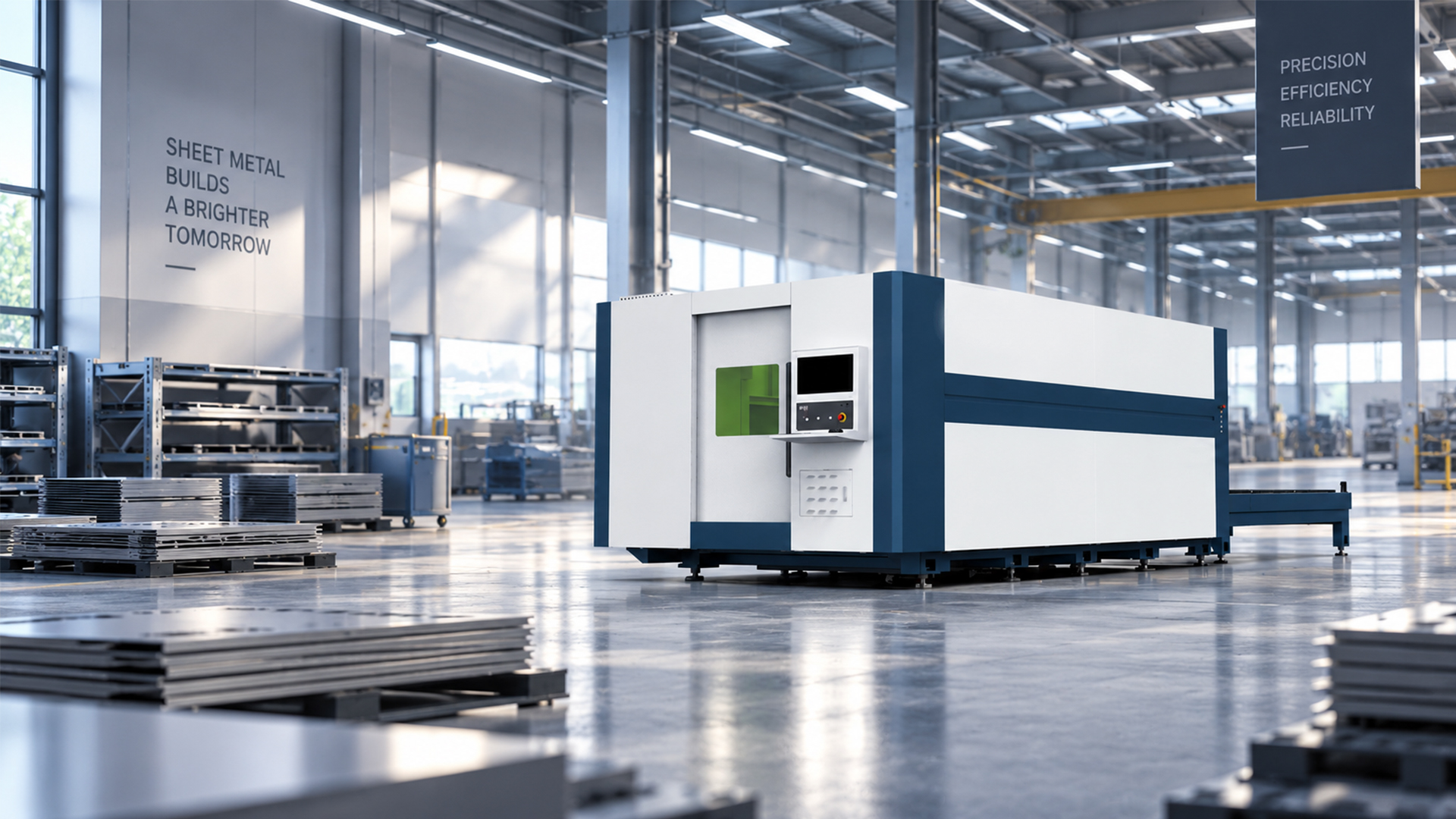
The HF-G-7X is engineered for precision sheet metal processing, featuring a high-rigidity structure, a high-dynamic motion system, and intelligent controls. These design characteristics are intended to support responsive movement and consistent cutting performance in day-to-day production. Fabricators should still verify the specific configuration, supported materials, working range, and applicable performance data against official documentation before determining its suitability for stainless steel enclosure work.
Operating costs extend beyond the purchase price. Assist gas consumption, electricity use, consumables, maintenance access, operator training, and required finishing work all affect the cost per acceptable part. A realistic production trial should record cutting time alongside edge condition, dimensional results, scrap, and downstream labor. This broader assessment helps identify whether an apparent speed advantage translates into useful manufacturing capacity.
Conclusion
Stainless steel enclosure fabrication depends on the relationship between design details, surface protection, dimensional control, and downstream assembly. Successful cutting is measured not simply by the appearance of an individual edge, but by how reliably each component fits, functions, and reaches the next production stage.
Manufacturers evaluating a fiber laser cutting machine for metal should test representative enclosure parts and document the results under realistic operating conditions. With application requirements clearly defined, Hymson Laser Machinery can be assessed alongside alternative suppliers on technical suitability and production value, helping fabricators make equipment decisions grounded in the demands of their own work.
