Over the past decade, the global biopharmaceutical industry has witnessed a significant structural shift toward complex, highly modified therapeutic candidates. As research transitions from simple linear sequences toward multi-functional incretin analogs and specialized structural motifs, procurement officers and supply chain leaders face escalating technical challenges.
Native, unmodified peptide sequences often exhibit brief elimination half-lives due to rapid enzymatic degradation by endogenous proteases. To overcome these pharmacological boundaries, modern molecular engineering relies on custom structural alterations, including N-terminal capping, backbone cyclization, and side-chain fatty acid lipidation. However, while these modifications enhance stability and receptor affinity, they introduce substantial synthetic friction during solid-phase peptide synthesis (SPPS).
For procurement managers, international API traders, and CDMO partners, evaluating prospective peptide synthesis companies requires looking far beyond initial pricing structures and lead times. Ensuring long-term commercial success demands a thorough evaluation of a supplier’s process optimization frameworks, analytical capabilities, and scalable industrialization footprint.
Key Audit Standards for Choosing a Specialized Peptide Company
When assessing potential partners, biopharmaceutical organizations must systematically evaluate facility operations across several technical domains. A comprehensive audit provides actionable visibility into a provider’s technical capacity for peptide development and manufacturing, helping procurement teams distinguish between basic laboratory-scale suppliers and true commercial-scale manufacturers.
Process Optimization and SPPS Infrastructure: Long-chain sequences and heavily modified chains frequently encounter steric hindrance during amino acid coupling. This obstacle can cause incomplete coupling, giving rise to closely related deletion sequences that are difficult to purify downstream. Advanced peptide synthesis companies address this by utilizing optimized SPPS protocols and real-time process monitoring to maximize crude yield and maintain batch consistency.
Analytical Control and Counter-Ion Conversion: In-process analytical rigor is another vital benchmark. Solid-phase synthesis typically leaves target molecules in trifluoroacetate (TFA) salt forms following TFA-mediated cleavage and preparative high-performance liquid chromatography (HPLC). Because residual TFA may affect certain formulation or biological testing requirements, counterion levels should be controlled according to the intended application. Verifying a supplier’s ability to efficiently exchange TFA for biocompatible acetate or chloride forms guarantees structural integrity and experimental reproducibility.
Scalable Production Footprint: Supply continuity depends on physical capacity. Procurement teams evaluating commercial viability should prioritize facilities capable of supporting multi-kilogram scales. An established manufacturing footprint mitigates supply chain bottlenecks as candidates progress toward full commercial distribution.
Practical Sourcing Considerations for Complex Peptide Development
The value of manufacturing specialization becomes particularly apparent when advancing complex peptide sequences through demanding project lifecycles. Real-world application scenarios across diverse research domains highlight why technical capabilities matter during supplier selection.
In metabolic peptide research molecules such as theselective amylin receptor agonist Eloralintide and the GLP-1/amylin receptor agonist Amycretin illustrate different approaches to peptide design and long-acting exposure. Synthesizing these lengthy, multi-modified sequences involves intricate side-chain assembly and specialized purification regimes to separate the target product from hydrophobic impurities. During scale-up, complex hydrophobic peptides may present recovery and purification challenges that require appropriate process development and optimization.
Conversely, short bioactive sequences like BPC-157 and KPV, alongside mitochondrial-derived peptides such as MOTS-c, illustrate the critical role of exact salt-form control and chromatographic purity. In cellular signaling and tissue repair models, inconsistent counter-ion exchange or residual impurities can introduce variable baseline data in analytical trials. Engaging an experienced peptide company can support controlled management of these chemical parameters through defined process and analytical procedures.
Scalable Industrialization Capabilities at UTIDE
To address the growing technical requirements of global biopharmaceutical enterprises, API traders, and CDMO partners, specialized peptide manufacturers offer scalable manufacturing solutions supported by appropriate quality systems.
Operating as a dedicated partner in peptide industrialization, UTIDE offers technical support covering process development, process optimization, scale-up, and industrial-scale manufacturing for complex peptide sequences.
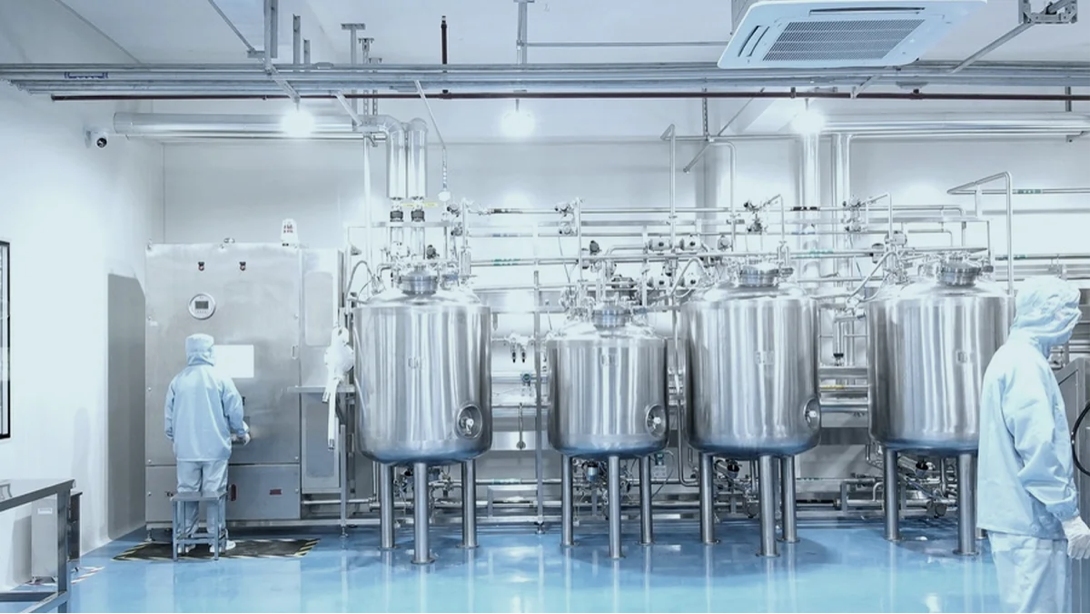
Equipped with industrial peptide synthesis and purification platforms and an annual capacity of 2,000 kilograms, UTIDE assists global partners with process development and scale-up for complex peptide candidates. By uniting high technical capabilities with dependable supply capacity and global technical support, it supports biopharmaceutical organizations to advance complex peptide programs with operational confidence.
Frequently Asked Questions
Why is process optimization crucial when scaling up multi-modified peptide sequences?
As peptide length increases or bulky modifications are introduced, steric hindrance during synthesis elevates the risk of deletion impurities. Systematic process optimization refines coupling efficiency and cleavage protocols, achieving high crude purity and minimizing yield losses during scale-up.
How does counter-ion selection affect downstream peptide applications?
Standard synthesis yields peptides as TFA salts, which may interfere with cellular assays and physical formulation stability. Converting TFA to biocompatible counter-ions, such as acetate or chloride salts, preserves product consistency and stability across analytical applications.
What key infrastructure metrics demonstrate commercial manufacturing capability?
Commercial manufacturing capability is defined by large-scale production facilities (such as an annual capacity of 2,000 kilograms), mature SPPS and preparative HPLC platforms, comprehensive quality management systems, and documented batch-to-batch reproducibility across multi-kilogram runs.
