The global dental market is going through a time of unprecedented growth, with the Asia-Pacific region being the fastest-growing area. Market estimates for 2026 show that the regional sector is on track to reach a mind-boggling USD 22 billion by 2032, thanks to a compound annual growth rate of 13.6%. This increase is not just because the population is growing; it’s because “value-based care” has become the norm in the economy. In this environment, the choice to improve clinical infrastructure is no longer a matter of luxury, but rather a strategic assessment of long-term Return on Investment (ROI). Practitioners are discovering that the expense of inaction—maintaining outdated analog systems—frequently surpasses the capital investment required for modernization, as patient retention and procedural efficiency emerge as the key drivers of profitability.
The move towards digital integration has been backed up by advances in material science and data processing. The arrival of self-healing composites, bioactive glass, and AI-driven diagnostic tools has changed how predictable treatments are for living things. From a business point of view, these new ideas lower the “failure rate” and post-operative problems that often lead to follow-up appointments that can’t be billed. Technology is a force multiplier for the modern clinic. It lets a smaller team handle more patients without losing the accuracy that makes a high-end dental service stand out.
MDfA: Closing the Investment Gap
For a lot of clinic owners, the biggest problem with adopting is how complicated the global market is. This is where MDfA’s (Messe Düsseldorf for Asia) strategic power becomes very important. MDfA brings together the world’s best manufacturers in one place, making it easier to compare technical details and do financial due diligence. These trade shows act as an “innovation filter,” showing the Asian market only the best and most clinically sound technologies. This makes sure that when a practitioner decides to invest, they are doing so based on a set of global standards that have been proven to work, not just on local marketing trends.
MDfA is more than just hardware; it also focuses on the “knowledge economy” by offering classes on managing a practice and the economics of technology. It’s just as important to know how to use a CBCT scanner or a milling unit as it is to know how to amortize it. The organization brings in financial experts and experienced clinicians from around the world who have successfully made the switch to digital. They provide a roadmap for long-term business growth that goes far beyond the exhibition floor.
FAMDENT Hyderabad: A Real-Life ROI Case Study
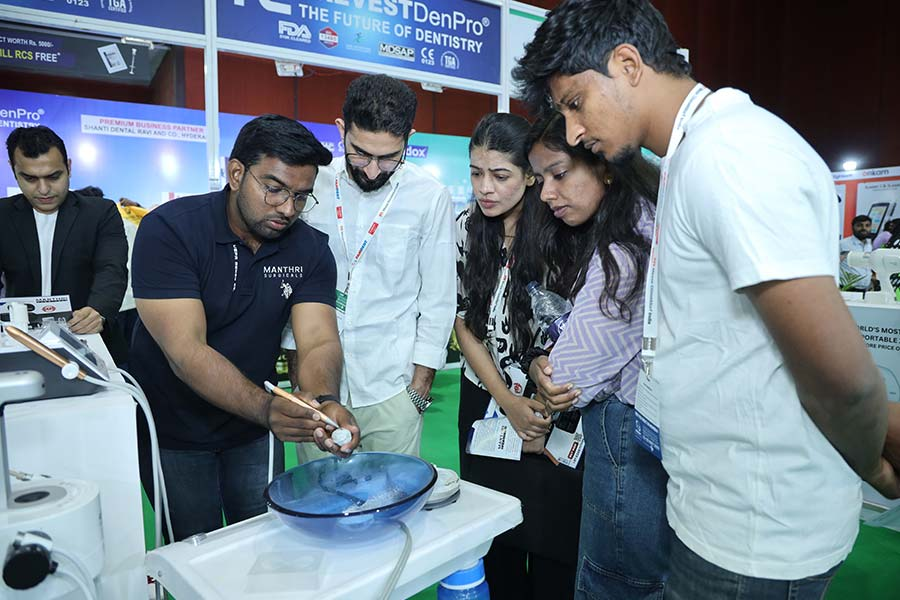
The FAMDENT Exhibition Hyderabad, which will take place on February 7–8, 2026, will be a live test for people who are thinking about buying new equipment. This event, which takes place at the HITEX Exhibition Centre, is a rare chance to see “Same-Day Dentistry” in action. The show has more than 120 exhibitors and is meant to show how a more efficient workflow can affect a clinic’s bottom line. Visitors can figure out how much money they could save on lab fees and how much more money they could make by getting more people to accept treatment by watching live demonstrations of chairside CAD/CAM and 3D printing.
A key highlight of the 2026 show is the emphasis on “modular” investment. Not every clinic needs to transition to a full digital suite overnight. FAMDENT Hyderabad allows practitioners to explore entry-level dental equipment, such as high-resolution intraoral cameras and portable digital X-ray units, which offer an immediate boost to diagnostic accuracy and patient trust. These smaller investments often pay for themselves within months by improving the “case conversion rate”—the frequency with which a patient agrees to a recommended treatment plan after seeing a clear, digital visualization of their dental health.
Getting the Most Out of Advanced Dental Service Tools
The technical details of the equipment on display at HITEX show that automation is becoming more common. AI-powered software now does most of the work of diagnostic imaging, consistently finding early-stage cavities and bone loss, which lowers the chance of human error. This means faster consultations and more accurate diagnoses for a dental service that sees a lot of patients. These tools, along with ergonomic delivery systems that reduce physical strain on the clinician, make sure that the practice can keep up its best work all day long, which effectively increases the total number of procedures performed each year.
Also, the move towards sustainable, paperless practices, which will be a big topic in 2026, lowers the costs of storing things and throwing away administrative waste. Modern practice management systems that work with diagnostic hardware let data flow smoothly, making sure that patient records, insurance claims, and treatment plans are all handled with clinical accuracy. This level of organisation not only saves money, but it also improves the clinic’s professional “brand,” bringing in more high-end patients who value efficiency and modern standards.
The End
Putting money into new dental technology is a way to make sure your practice will be around in the future. The Asian healthcare market is setting new global standards, so the only way to make sure long-term growth is to stay up to date. The FAMDENT Exhibition Hyderabad 2026 is the best place to go from being curious to taking action. It gives you the tools and information you need to make a smart, profitable choice. You can join thousands of professionals and stay at the forefront of the digital revolution by consulting the official MDfA trade fair calendar and being at the forefront of the digital revolution.
