A diesel generator is often expected to deliver dependable power when grid electricity is unavailable or unreliable. For businesses, contractors, and project operators, regular servicing is therefore essential for maintaining performance and reducing avoidable downtime. Knowing how to service a diesel generator also helps purchasing teams evaluate equipment more effectively, because maintenance access, component design, and manufacturer support can influence long-term operating costs.
Begin With a Safe Inspection
Before servicing any diesel generator, operators should shut the unit down and allow hot components to cool. The generator should be placed in a suitable outdoor location with proper ventilation, away from combustible materials. For buildings equipped with an engine room, the exhaust pipe of the diesel generator set must be routed to a safe outdoor area for emission, preventing toxic exhaust gases from accumulating inside the building and ensuring personnel health and stable equipment operation. Units must also be protected against short circuits and rust in adverse weather.
A visual inspection should come first. Check for loose or missing parts, fuel or oil leaks, damaged cables, abnormal corrosion, and signs of physical damage. FIRMAN’s maintenance guidance also emphasizes checking the generator before starting it, particularly for damage that may have occurred during transportation.
For business operators managing several machines, recording inspection results can make preventive maintenance easier. Each unit can have a service log covering operating hours, oil changes, filter replacement, repairs, and unusual operating conditions.
Check Engine Oil and Lubrication
Engine oil is one of the first maintenance items to inspect because adequate lubrication helps protect internal engine components. Check the oil level according to the generator’s operating instructions and use the specified oil grade for the engine and ambient conditions.
Oil should also be replaced according to the manufacturer’s maintenance schedule rather than simply waiting for noticeable performance problems. Standard industry guidelines for diesel generators include checking the engine oil regularly and changing both the oil and the oil filter at defined service intervals.
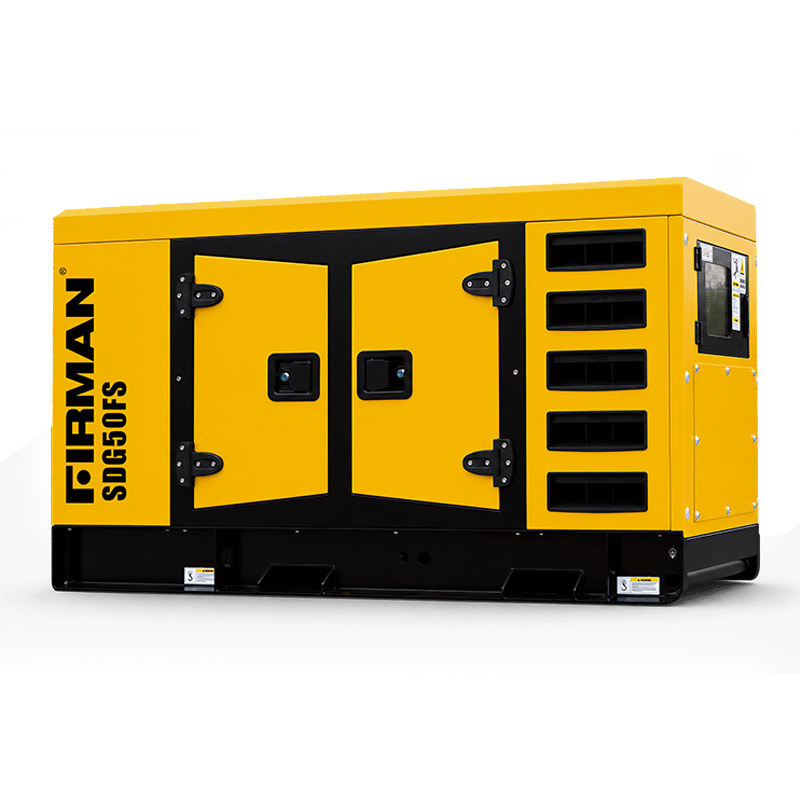
The FIRMAN SDG50FS has an oil capacity of 10 L. This model belongs to the SDG Bumble Bee diesel generator line, prime output 50KVA and standby output 55KVA @ 400V, with 8hour daily use basement fuel tank.
The oil capacity should not be interpreted as a universal refill quantity for every diesel generator. Different engines require different amounts, so technicians should always follow the specific product manual.
Maintain the Fuel System
Clean fuel is critical to diesel engine operation. Water, dirt, and other contaminants in the fuel system can affect combustion and may damage fuel-system components. Regular servicing should therefore include checking the fuel tank, fuel lines, connections, and filters.
For commercial fleets, fuel management deserves particular attention. Operators should store diesel appropriately, monitor fuel quality, and avoid allowing contamination to enter the tank during refueling. If a generator develops difficult starting, unstable running, or reduced output, the fuel system should be among the areas investigated.
Inspect the Air and Cooling Systems
Airflow affects both combustion and engine temperature. Inspect the air cleaner regularly and clean or replace the filter according to the manufacturer’s recommendations. A restricted air filter can reduce the amount of air available to the engine and may affect operating performance.
For liquid-cooled generator sets, cooling-system maintenance is critical. Operators need to routinely check coolant levels, hoses, fittings, and any signs of leakage. Operating with insufficient coolant can cause overheating and engine damage, so major leaks should be repaired before continued operation.
The exact cooling arrangement varies by generator model, so maintenance procedures should follow the applicable service manual rather than applying one schedule to every machine.
Check the Battery and Electrical System
Starting reliability is especially important for diesel generators used as standby or emergency power sources. For electric-start models, inspect the battery, terminals, cables, and charging system. Loose or corroded connections can interfere with starting performance.
The FIRMAN SDG50FS uses an electric-start system with a smart control panel. Automatic switch is also an optional for starting the generator.
These specifications give professional buyers useful information when comparing diesel generator models and assessing the electrical configuration of potential equipment.
Inspect Exhaust, Frame, and Operating Condition
A generator should also be checked for abnormal vibration, unusual sounds, exhaust problems, loose fasteners, and structural damage. The exhaust system deserves particular attention because leaks can create dangerous conditions.
The SDG50FS has a silent canopy design and a listed noise level of 70 dB at 7 meters, making it neighbour- and environmentally-friendlyIt has a gross weight of 1000 kg and packing dimensions of 2200X950X1250 mm.
These physical specifications matter for businesses transporting equipment between jobsites. Maintenance teams should inspect the components regularly, particularly when generators are frequently moved.
Exercise the Generator During Storage
A standby generator can deteriorate even when it is not being used frequently. FIRMAN recommends running its generator once a month with a load. This gives operators an opportunity to verify starting, electrical output, and general operating condition before an actual power interruption occurs.
For longer-term storage, the manufacturer’s recommendations should be followed carefully. For longer-term storage, technicians should follow the specific diesel generator manufacturer’s storage procedure, including any measures recommended to protect the engine from internal corrosion.
Choose Power Equipment Manufacturers With Strong Support
Maintenance becomes easier when the equipment manufacturer provides clear manuals, spare parts, technical assistance, and after-sales support. This is an important consideration for business buyers comparing power equipment manufacturers. The purchase decision extends far beyond the initial equipment price.
FIRMAN’s diesel generator portfolio includes SDG models as well as commercial and industrial generator sets, giving buyers options for different power requirements and operating environments.
When comparing power equipment manufacturers, businesses should therefore assess both product specifications and service infrastructure. A supplier that supports preventive maintenance can help operators protect equipment performance over a longer operating period.
Keep Maintenance Preventive, Not Reactive
Learning how to service a diesel generator is ultimately about establishing a repeatable maintenance routine. Oil, fuel, air, cooling, batteries, electrical components, exhaust systems, and physical condition should all receive appropriate attention.
For professional buyers, maintenance requirements should be considered before purchasing, alongside output, runtime, alternator design, operating environment, and support. A well-specified generator from an established manufacturer, combined with disciplined servicing, can provide a more dependable power solution for commercial and project applications.
