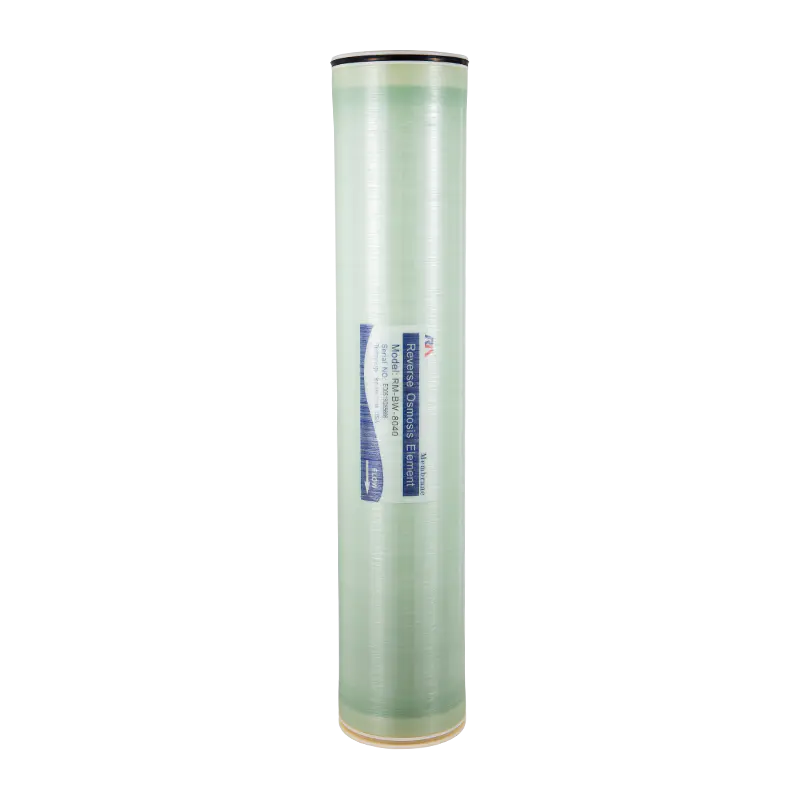
Securing reliable freshwater supplies from challenging underground aquifers and inland rivers requires sophisticated physical separation engineering. Industrial facilities and municipal authorities constantly face elevated mineral concentrations that disrupt standard municipal supply networks. Implementing effective brackish water treatment strategies allows plant operators to transform heavily mineralized liquid into high-purity process water. Scientific innovations in synthetic polymer chemistry continue to revolutionize how global industries approach inland desalination projects.
The Chemical Composition of Brackish Aquifers
Underground water sources frequently contain substantial concentrations of dissolved minerals, silica, and microscopic organic residues. Raw feed water originating from deep geological formations often exhibits total dissolved solids levels ranging up to ten thousand parts per million. Specialized filtration configurations target these specific ionic profiles to prevent severe mineral scaling on sensitive interior surfaces. Analytical chemistry assessments help plant engineers determine precise pretreatment requirements before raw liquid enters primary separation loops.
Managing variable feed water chemistry demands continuous monitoring of electrical conductivity and mineral saturation indexes. Unchecked mineral precipitation can quickly choke fluid channels and force premature replacement of high-cost filter modules. Facility managers rely on accurate chemical profiling to maintain stable operating pressures and protect capital equipment investments.
Mechanics of Aromatic Polyamide Membrane Elements
Modern separation science relies heavily on advanced aromatic polyamide composite structures designed specifically for demanding saline applications. These specialized membrane elements achieve remarkable water production volumes while maintaining exceptional salt rejection performance standards. Microscopic polymer barrier layers selectively block dissolved ions while permitting pure water molecules to traverse smoothly. High permeability characteristics allow industrial plants to process large volumes of liquid with minimal hydraulic resistance.
Manufacturing protocols utilize interfacial polymerization to deposit ultra-thin active layers onto porous polysulfone support backings. This multi-layered composite design withstands high operating pressures without experiencing structural compaction or polymer deformation. Scientific advancements in polymer cross-linking density maximize solute rejection while optimizing fluid flux across diverse operating temperatures.
High-Performance Removal of Soluble Salts and Silica
Industrial boilers and sensitive electronics manufacturing lines demand exceptionally pure water devoid of trace mineral contamination. Advanced polyamide filters demonstrate high performance in removing soluble salts, total organic carbon, and reactive silica from liquid streams. Removing dissolved silica prevents hazardous scale deposition inside high-pressure steam turbines and precision cooling circuits. Facility operators achieve strict purity benchmarks by deploying specialized multi-stage separation configurations.
Conducting periodic chemical analyses ensures that residual mineral levels remain well below critical manufacturing tolerance thresholds. Microscopic ionic impurities can trigger catastrophic failures in high-temperature industrial steam generation systems over time. Rigorous removal protocols safeguard delicate downstream machinery and reduce overall plant maintenance downtime significantly.
Surface Modification Technologies for Fouling Resistance
Biological growth and particulate accumulation present persistent operational hurdles during continuous inland desalination processes. Modern manufacturing techniques modify membrane surfaces to alter electric charge dynamics and enhance physical smoothness. Increasing surface hydrophilicity discourages the adhesion of suspended pollutants and microorganisms onto active filtration areas. The FR series incorporates these advanced surface modifications to reduce contamination risks and extend operational lifespans.
Minimizing biological fouling decreases the frequency of aggressive chemical cleaning cycles required during routine maintenance schedules. Plant operators benefit from extended service intervals and more stable transmembrane pressure profiles over extended operating hours. Enhanced surface durability translates directly into lower long-term operational expenditures for commercial desalination facilities.
Applications in Power Generation and Electronics Manufacturing
Power plants require massive quantities of ultrapure makeup water to replace steam losses in closed-loop thermal generation cycles. Industrial pure water of various scales serves as the lifeblood of modern semiconductor fabrication and chemical synthesis plants. Implementing robust brackish water treatment systems ensures that power generation boilers operate safely without scaling risks. Electronics manufacturers depend on consistent, low-conductivity process water to rinse delicate microelectronic components during production.
High-purity liquid requirements dictate strict adherence to multi-stage filtration protocols across all advanced manufacturing environments. Integrating specialized polyamide modules into existing plant architecture prevents mineral deposition on sensitive microchip surfaces. Reliable separation performance supports uninterrupted commercial operations across multiple high-tech industrial sectors.
Pretreatment Protocols and Suspended Solid Removal
Upstream clarification stages play a decisive role in protecting sensitive polyamide separation layers from premature mechanical damage. Coarse screening, multimedia filtration, and ultrafiltration modules capture suspended silt and biological matter before fluid reaches high-pressure pumps. Neglecting upstream pretreatment often triggers rapid particulate fouling and irreversible membrane channel blockage. Plant supervisors monitor silt density indexes daily to verify that raw feed water meets strict inlet quality criteria.
Deploying comprehensive multi-barrier protection safeguards delicate polymer structures against sudden chemical shock and physical abrasion. Minimizing particulate loading reduces overall chemical cleaning requirements and lowers long-term facility maintenance expenditures substantially. Integrated pretreatment strategies secure continuous high-pressure performance across challenging industrial operating environments.
Economic Benefits and Capital Expenditure Optimization
Adopting advanced separation technologies yields substantial financial savings for large-scale industrial operations and municipal infrastructure projects. Optimizing fluid recovery rates reduces raw water intake volumes and minimizes expensive wastewater disposal fees significantly. Furthermore, durable polymer modules lower replacement frequencies, thereby conserving capital expenditure budgets over extended operational lifespans. Financial efficiency remains a primary driver behind the widespread industrial adoption of modern membrane filtration systems.
Project developers allocate saved financial resources toward broader facility automation and environmental monitoring upgrades. Lower maintenance overhead combined with reduced chemical consumption improves the overall economic viability of commercial water treatment plants. Economic resilience empowers industrial facilities to maintain competitive advantages within rapidly evolving global markets.
Sustainable Environmental Management and Water Reuse
Modern environmental regulations require industrial facilities to minimize wastewater discharge volumes through efficient internal recycling loops. Processing high-concentration saline wastewater and beverage manufacturing effluent helps plants comply with strict zero liquid discharge mandates. Effective brackish water treatment strategies reduce ecological stress on regional freshwater aquifers and municipal utility grids. Sustainable liquid management bridges the gap between industrial productivity and ecological conservation on a global scale.
Environmental engineers rely on advanced polymer systems to reduce the ecological footprints of large-scale manufacturing operations. Effective recycling initiatives protect natural aquatic ecosystems from harmful chemical and mineral pollutant loads. Preserving regional water resources requires continuous technological innovation and rigorous operational management across every industrial sector.
Conclusion
As water scarcity and environmental compliance reshape industrial operations, liquid management technologies continue to advance at a steady pace. Runmo delivers high-quality filtration products that address demanding separation tasks, with the BW and FR series offering a brackish water treatment platform engineered for exceptional salt and mineral rejection. For customized solutions aligned with specific project goals, the Runmo technical advisory team provides consultation services to help refine purification system designs.
