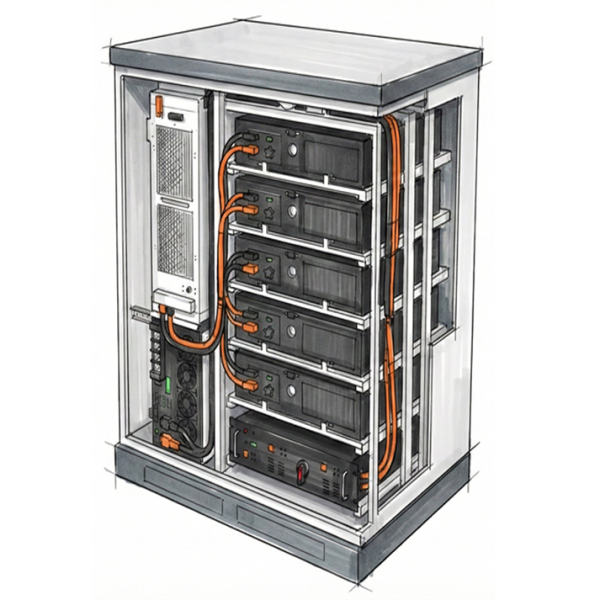
Projected return on investment for commercial power conditioning infrastructure often diverges from real-world performance once systems go operational. Integrating an industrial battery energy storage system (BESS) requires addressing dynamic electrical environments rather than relying purely on idealized energy tariff models. Facility engineers who assess real-world load behaviors early prevent financial shortfalls caused by unmitigated power demand spikes and complex utility rate restructures.
Engineered for demanding industrial sites, Enjoypowers produces heavy-duty power conversion hardware tailored to overcome complex site conditions. Built on dedicated internal research and development, custom engineering options, validated operational stability, and responsive global technical support, the organization assists developers with complex project integrations. Engineering consultants and facility operators are encouraged to submit project details to receive tailored technical proposals and custom site evaluations.
Adapting Power Systems to Evolving Utility Tariff Structures
Utility companies frequently modify peak-pricing time blocks and demand charge structures every few years, which invalidates rigid battery dispatch algorithms. Selecting flexible hardware allows facility energy management systems to update operating profiles dynamically without requiring physical component upgrades or complete system replacements.
Adaptable control architectures protect financial performance against unexpected tariff shifts over multi-year asset lifespans. System designers prioritize operational software versatility over simple static capacity sizing when planning site investments.
Managing Transient Load Surges and Sudden Peak Events
Average power profiles across commercial sites often appear predictable, yet short-duration events like motor starts or heavy chiller cycling create high power spikes. A single 30-second power surge can establish the peak demand charge for an entire billing month, rendering average load models inaccurate.
Selecting an industrial battery energy storage system (BESS) with high dynamic response capabilities allows conversion hardware to discharge instantly during unexpected load spikes. Absorbing brief power surges locally protects commercial facilities from high utility demand penalties.
Mitigating Three-Phase Imbalance Hazards in Commercial Facilities
Commercial and industrial facilities typically experience phase current imbalances ranging from 8% to 20% due to single-phase HVAC units, lighting loads, and EV charging stations. Standard power conversion systems often derate or trip under unbalanced conditions, reducing nominal nameplate capacity down to 70% usable output.
Deploying a modular energy storage system designed to support 100% unbalanced loads prevents premature system trips and maintains full rated power output. Maintaining balanced power delivery across all three phases protects sensitive downstream industrial machinery from phase voltage unbalances.
Integrating Black-Start Capabilities and Seamless Grid Transfers
Power outages present significant financial risks to manufacturing plants, far exceeding monthly utility tariff savings. Grid-tied-only conversion hardware remains non-operational during grid failures, offering no protection against unexpected utility disconnections.
Advanced power conversion platforms support autonomous black-start sequences and rapid on/off-grid transfers to sustain continuous factory operations. Dual-function conversion architectures deliver both tariff optimization during normal grid operation and uninterrupted backup power during utility outages.
Structural Flexibility Through Modular Hardware Topologies
Engineers configuring commercial installations benefit from flexible conversion architectures that adjust to expanding facility loads. Deploying a modular energy storage system allows plant managers to scale conversion capacity incrementally as site power requirements increase over time.
Modular hardware design can simplify installation and maintenance by allowing power conversion capacity to be configured through multiple modules. Scalable installation choices minimize upfront capital outlay while maintaining future expansion flexibility.
Sizing Batteries for Peak Surge Events Rather Than Daily Averages
Determining battery energy capacity requires evaluating peak load duration and step-change magnitude rather than simple daily kilowatt-hour averages. Sizing system capacity specifically to buffer high-current transient events ensures that the storage asset delivers intended peak-shaving benefits continuously.
Sufficient power discharge capacity prevents sudden industrial motor startups from exceeding set utility demand limits. Sizing strategies focused on peak events secure long-term utility bill reductions.
Resolving Phase Current Distortion via Advanced PCS Controls
Dynamic phase balancing within advanced power conversion units prevents local phase voltage degradation caused by unequal load distribution. Integrated active power conditioning algorithms adjust single-phase current delivery in real time to stabilize main busbar voltages.
Neutral line current reduction lowers thermal stress across distribution transformers and cabling. Minimizing internal voltage distortion preserves the operational lifespan of sensitive digital control infrastructure.
Operational Resilience in Harsh Commercial Environments
Industrial facilities subject electrical hardware to harsh operating environments, including elevated ambient temperatures, high humidity, and industrial airborne particulate matter. Hardware systems built by Enjoypowers utilize IP66-rated weather-resistant enclosures and robust thermal management channels to preserve power semiconductor performance.
Proven operational stability across demanding deployment environments minimizes equipment downtime risks in continuous manufacturing facilities. High component durability supports long-term equipment reliability in demanding industrial locations.
Conclusion
Maximizing value from commercial energy storage installations requires power conversion hardware engineered to withstand phase unbalance, dynamic load surges, and evolving utility rate structures. Utilizing an industrial battery energy storage system (BESS) with a flexible modular energy storage system topology maintains site power stability while optimizing operational electricity costs.
Enjoypowers manufactures industrial-grade power electronics backed by proprietary R&D, flexible product customization, tested system stability, and comprehensive global technical service support. System integrators, project developers, and facility managers are invited to contact technical specialists to obtain detailed product documentation and request custom system proposals.
