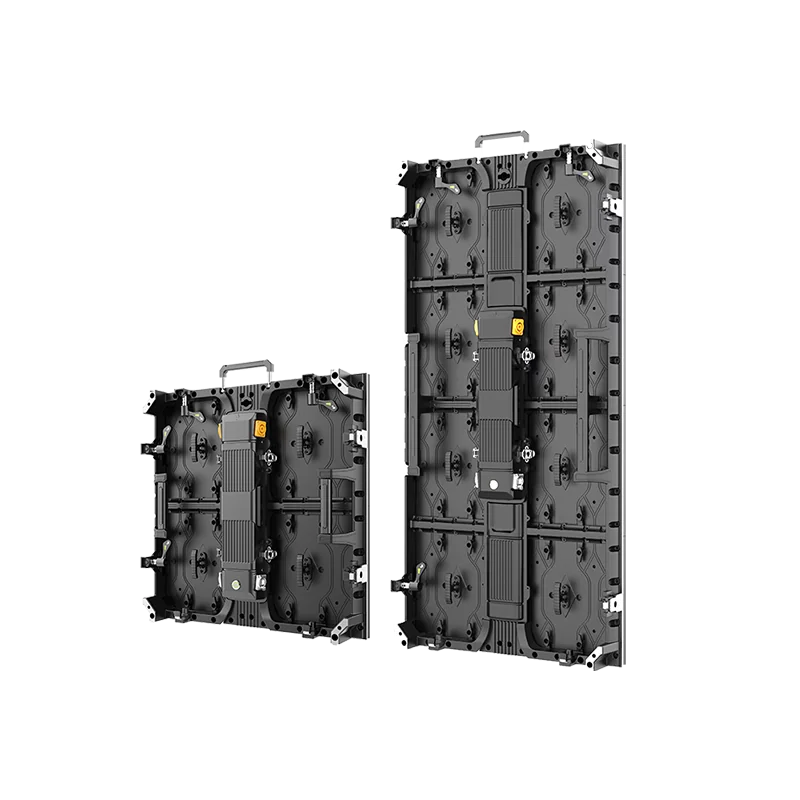
Consider the operational demands placed on a thin LED display in a professional setting. Its reliability cannot be left to chance. The 72-hour aging test exists as a fundamental manufacturing validation, a process that separates robust products from those prone to early failure. For a company like LEDFUL, this test is a non-negotiable phase in production, ensuring that every module delivers on its performance promise from the first installation.
The Science Behind Extended Operation
This test involves operating display modules at peak capacity for an uninterrupted 72-hour period. The goal is to force any inherent weaknesses in components to manifest in a controlled factory environment rather than at a client’s venue. For a thin LED display, managing heat dissipation and electrical stability within a slim profile is a significant engineering challenge. This prolonged stress test verifies the integrity of soldering, drivers, and LEDs under thermal duress, screening out units that might falter.
Implications for High-Stakes Environments
Equipment failure during a live event or critical presentation carries substantial reputational and financial cost. A display that has endured and passed a full aging cycle demonstrates a lower statistical probability of such catastrophic failure. This proven resilience is a key consideration for technical managers. It provides a measurable indicator of a product’s maturity and its suitability for demanding applications where consistency is mandatory.
A Foundation for Rental Business Models
The business case for this testing is particularly strong for a rental LED display. Rental inventory undergoes cyclical stress from transportation, frequent assembly, and varying environmental conditions. Investing in displays pre-screened through 72-hour aging directly reduces total cost of ownership by minimizing field repairs, preventative maintenance intervals, and unexpected replacements. This operational efficiency allows rental providers to maintain reliability across their fleet.
The implementation of a 72-hour aging test is a clear commitment to product quality over short-term production speed. It addresses the core longevity concerns associated with modern, compact display technology. For buyers evaluating a thin LED display, understanding this factory procedure offers insight into its expected service life. LEDFUL employs this rigorous protocol to substantiate the durability of its products, providing partners in both fixed and rental LED display sectors with a more dependable and predictable visual technology solution.
