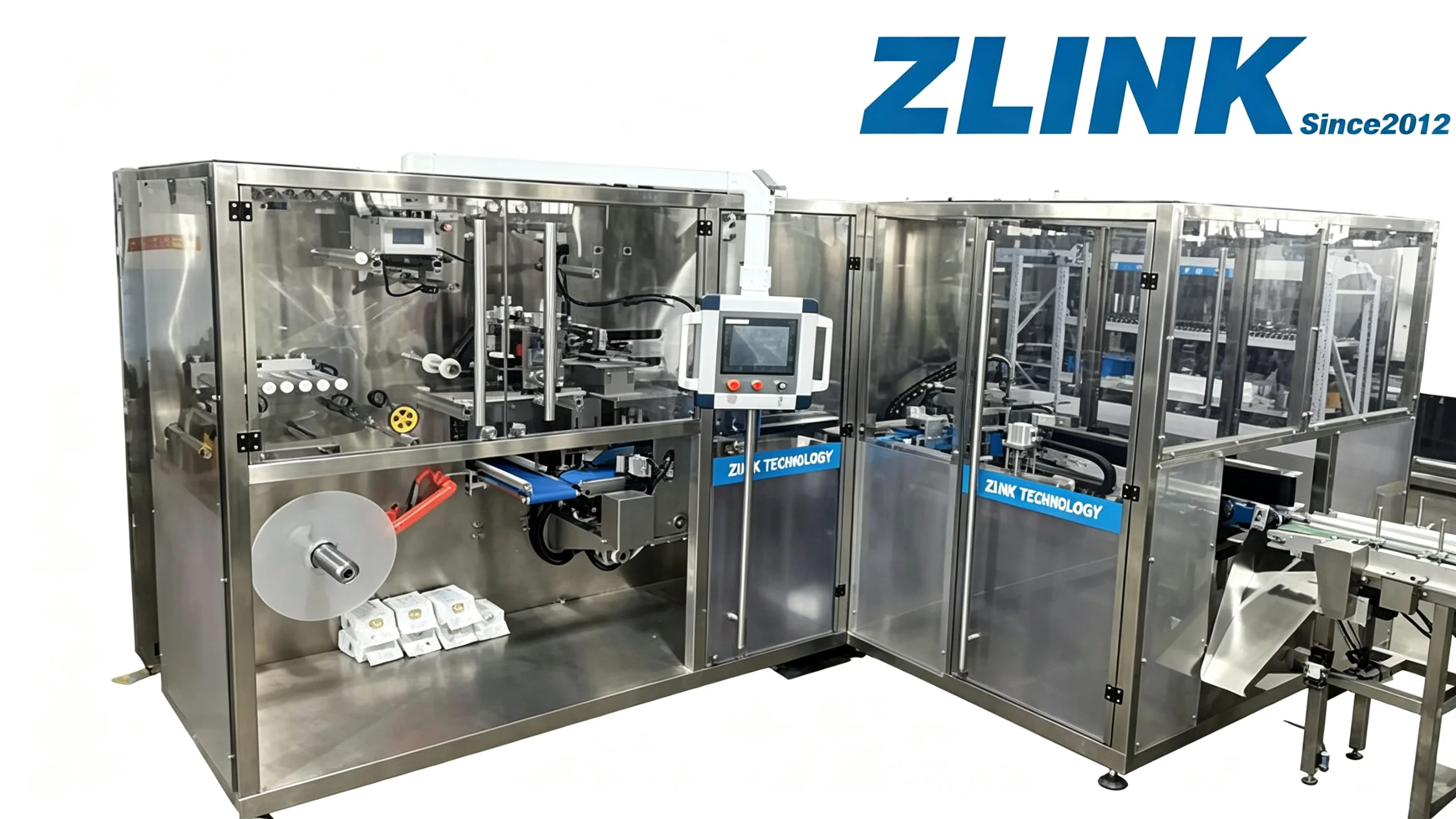
Synchronizing primary converting operations represents a fundamental mechanical requirement when processing dry nonwoven fabrics into fully saturated individual wipe stacks. Converting managers and facility engineers evaluating production line performance analyze web drive mechanics, fluid metering, and cutting blade timing to ensure steady output across long shifts. Establishing harmonized physical control from raw material unwinding through dynamic panel folding, liquid distribution, and high speed crosscutting reduces web tension fluctuations and protects substrate integrity. Operating an efficient wet wipes machine enables manufacturing plants to balance continuous web tension across multiple active processing lanes, supporting predictable downstream packaging transitions. As an established wet wipes equipment provider ZLINK configures versatile converting machinery engineered to maintain tight mechanical alignment and reliable process synchronization across demanding industrial production environments.
Unwind Tension Control and Web Guiding Mechanics
The converting process begins at the unwinding station where continuous nonwoven webs transition into active processing channels under precise tension control. Dynamic tension sensors monitor fabric drag constantly, transmitting speed adjustment commands to unwind shafts to prevent material stretching or web sagging.
Tension control reviews may include roll diameter, web width, splice tape, and guide access. ZLINK converting line configurations can be discussed with tension sensors and edge guides matched to the substrate. Reviewing these details can help support stable web travel as nonwoven lots and line speeds change.
Electronic edge position guiders correct lateral drift before broad nonwoven sheets travel into longitudinal slitting assemblies where rotating knives separate the material into individual web ribbons. Maintaining uniform tension across all lanes prevents material bunched edges and structural fiber damage as webs advance into dedicated panel folding guides.
Mechanical Folding Channels and Longitudinal Panel Alignment
Once slitting is complete, individual nonwoven ribbons move into dedicated mechanical folding channels engineered to form precise panel configurations without distorting fiber alignment. Driven traction rollers pull nonwoven strips through specialized forming plates designed to produce Z fold, C fold, or continuous interfolded sheets according to product specifications. Precise edge guiding plates maintain uniform overlap across active lanes, ensuring consistent folded width dimensions before the substrate enters liquid saturation zones. Utilizing a flexible wet tissue machine allows manufacturing facilities to adjust panel folding configurations efficiently while preserving continuous web velocity and preventing transverse fiber distortion.
Precision Fluid Dosing and Closed Loop Wetting Assemblies
Applying liquid formulations uniformly across moving nonwoven ribbons requires closed loop dosing systems synchronized with main web drive speeds. Stainless steel spray manifolds deliver precise lotion volumes onto nonwoven web layers prior to crosscutting, ensuring complete fluid absorption without leaving dry fabric sections. Dynamic flowmeters measure lotion distribution continuously, automatically adjusting pump flow rates to match line speed variations during startup and deceleration phases.
Wetting reviews may include formulation viscosity, target ratio, spray pattern, and drain access. ZLINK dosing modules can be specified with flowmeters and sanitary pipework suited to the solution. Reviewing these points can help operators manage lotion application during speed changes and support sanitation routines between batches.
Sanitary fluid pipework equipped with low point drain valves supports routine sanitation routines, assisting converting facilities in satisfying international personal care hygiene standards.
Rotary Cross Cutting and Mechanical Synchronization
After passing through liquid dosing channels, continuous nonwoven ribbons enter high speed rotary cutting assemblies where synchronized blades execute clean transverse cuts. Precision engineered rotary cutter shafts rotate at speeds synchronized directly with web feed rates to deliver uniform sheet length dimensions without tearing fabric edges.
Cutting reviews may consider sheet length, blade condition, counter knife access, and stack count. ZLINK rotary cutting arrangements can be discussed around these parameters with timing synchronized to web feed. Checking cut edge samples and blade inspection routines can help support stable sheet separation across active lanes.
Proper clearance between rotating blades and fixed counter knives helps achieve clean fiber separation across active processing lanes. Maintaining precise timing between cutting blade rotation and substrate feed velocity prevents material bunching and protects blade edge longevity during continuous high speed production cycles.
Dynamic Stacking Conveyors and Stack Organization
Cut nonwoven sheets advance immediately onto dynamic conveyor belts equipped with optical tracking sensors to organize individual wipes into structured stack units. Servo driven counting mechanisms stack sheets systematically according to designated wipe counts before transferring them toward primary packaging feed corridors. Controlled acceleration along transport lanes maintains uniform stack spacing, preventing stack tipping or geometric distortion prior to flow wrapping. Modern converting setups integrate dynamic stack transfer modules that accommodate varied wipe stack heights smoothly, supporting flexible batch transitions across diverse product specifications.
Inline Telemetry Systems and Dynamic Quality Assurance
Centralized control software monitors telemetry data across every converting stage continuously, displaying processing velocity, fluid dosing rates, and stack counts on interactive operator screens. Optical vision sensors audit stack alignment and cut edge accuracy in real time, identifying non conforming units before primary flow wrapping. Automated rejection mechanisms receive signals from control units to divert defective stacks from main transport lines without causing machinery stoppages. Deploying versatile ZLINK wet wipes machinery enables manufacturing plants to track key performance parameters, supporting consistent product quality and operational reliability across continuous shifts.
Optimizing Full Line Balance for Industrial Converting Facilities
Achieving long term operational stability across high capacity converting operations requires balancing web drive torque, liquid application pressure, and cutter shaft rotation. Facilities optimizing machinery setups analyze line balance to minimize mechanical wear and energy consumption during continuous manufacturing runs. Modular converting designs allow engineering teams to reconfigure processing lanes and downstream connections as production requirements expand over time. Standardizing operational routines and preventive maintenance schedules enables wet wipe converting plants to maintain repeatable product quality while maximizing capital equipment performance.
