Industrial electrical enclosures operate under demanding conditions in oil and gas facilities, chemical plants, and pharmaceutical factories. Equipment such as an explosion proof LED light fixture must remain suitable for its hazardous area. Heat, moisture, vibration, and corrosive substances can gradually damage protective components. Regular inspections help maintenance teams identify defects before they affect safety or interrupt operations.
Decisions about repair or replacement depend on equipment condition, service history, and manufacturer requirements. Minor defects may allow approved repairs, while damage to critical joints or cable entries may require replacement. Clear inspection criteria help facility managers control maintenance costs and plan corrective work before small problems become serious faults.
Establish an Inspection Schedule
Inspection frequency should reflect the operating environment. Equipment exposed to high temperatures, chemical vapors, frequent washdowns, or heavy vibration may need closer attention than equipment in stable indoor conditions. The site’s hazardous-area assessment, applicable regulations, and manufacturer’s instructions should guide the maintenance plan.
Previous inspection records can reveal recurring problems. Repeated corrosion, loose fasteners, or deteriorating seals may indicate that inspection intervals need adjustment. Changes in production processes or cleaning methods can also affect equipment condition, making regular reviews important.
Routine checks should cover enclosure covers, bolts, seals, cable entries, mounting points, and external surfaces. Technicians should look for cracks, corrosion, moisture ingress, and unauthorized modifications. These visual checks do not replace formal inspections or required electrical testing. Work must follow site safety procedures and manufacturer instructions.
Identify Damage That Requires Attention
Seals can deteriorate after prolonged exposure to heat, humidity, oils, or cleaning chemicals. Hardened or missing seals may allow moisture and contaminants to enter an enclosure. Loose fasteners can also affect cover fit and protective performance. Defects should be assessed promptly to determine whether approved corrective work is sufficient.
Flameproof enclosures require particular care because their joint surfaces must remain within specified limits. Scratches, corrosion, damaged threads, or unauthorized machining may affect the protection method. Ordinary sealant cannot be assumed to restore the original certified condition. Repairs must follow manufacturer requirements and applicable hazardous-area standards.
Surface discoloration does not automatically require replacement. Minor corrosion may be treatable when the material and approved procedures permit it. Deep pitting, cracks, distorted covers, and weakened mounting points need closer assessment. Equipment damaged by impact, electrical faults, or overheating should not return to service until its suitability has been evaluated.
Decide Between Repair and Replacement
Repair may be appropriate when the defect involves a replaceable component and an approved procedure preserves the equipment’s certified design. Certain gaskets, fasteners, and cable-entry components may be replaceable, depending on the product. Compatible parts and documented repair instructions are essential.
Replacement becomes more appropriate when the enclosure body is cracked, critical flameproof surfaces exceed permitted damage limits, or corrosion has substantially weakened the structure. Missing identification information or uncertain certification details may also require specialist assessment. Equipment should remain out of service if its protection characteristics cannot be verified.
Age alone should not determine replacement. An older enclosure may remain suitable if its condition and protective properties are satisfactory. Newer equipment may require replacement after severe chemical exposure or mechanical damage. Procurement teams should compare repair costs, replacement availability, downtime, and compatibility with existing wiring.
Check Cable Entries and Replacement Equipment
Cable entries form part of an enclosure’s protective boundary. Incorrect thread types, unsuitable seals, or poor installation can compromise the assembly. Before selecting explosion proof electrical fittings, technicians should confirm cable construction, armor requirements, entry dimensions, enclosure material, and the required protection method.
Where a replacement involves lighting equipment, the fixture’s hazardous-area classification, temperature requirements, and ingress protection should be verified against the enclosure specification; the inspection and replacement criteria described above apply to the luminaire’s enclosure as well. Product appearance alone cannot establish suitability. Technical documentation and relevant certification details should be reviewed before installation.
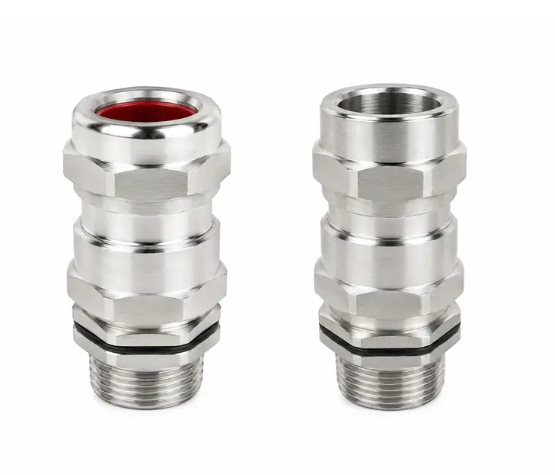
For armored cable connections, the BDM-II Series Explosion-proof Armored Single Seal Cable Gland offers an option for technical evaluation. Sunleem EEW provides this series with multiple thread sizes and thread types. Its armored single-seal design supports specified cable-wiring and pipe-wiring applications.
Available materials include stainless steel, nickel-plated brass, and galvanized carbon steel. These options allow buyers to assess suitability for conditions involving high temperatures, high humidity, and highly corrosive environments. The selected configuration must match the installation requirements, and relevant certification details should be verified before use.
Use Inspection Records to Plan Maintenance
Inspection records should include equipment location, inspection date, observed defects, corrective actions, and follow-up responsibilities. Photographs can help teams track corrosion and coating deterioration over time. Records of replacement parts and technical documentation also support future maintenance and purchasing decisions.
Consistent records help facility managers identify recurring faults, estimate maintenance costs, and prepare compatible spare parts. They also allow engineering teams to compare equipment condition across inspection cycles and plan replacement work before unexpected failures disrupt operations.
Inspection and replacement decisions should reflect equipment condition, manufacturer requirements, and site hazards. For industrial buyers assessing replacement options, Sunleem EEW offers explosion-proof electrical products that can be evaluated against project needs. Careful specification checks and reliable maintenance records help teams make practical decisions and maintain suitable protection in hazardous areas.
