Modern convention halls occupy a critical niche in the public assembly market, requiring seating solutions that can transition seamlessly between technical symposiums, large-scale trade shows, and high-capacity gala events. In 2026, the challenge for facility operators is to identify providers capable of delivering massive volume while maintaining high ergonomic standards and long-term structural reliability. Because convention centers are subjected to extreme wear—frequent floor reconfigurations, heavy weight loads, and high turnover rates—selecting the correct supplier involves rigorous scrutiny of manufacturing provenance and mechanical design. This report provides a comparative analysis of the leading suppliers, based on performance benchmarks and infrastructure adaptability, to assist in procurement decisions for large-scale venues.
Selecting the right seating partner requires evaluating how a manufacturer handles the intersection of aesthetic versatility and robust mechanical engineering.
Full List of Top 7 Brands
- Leadcom Seating
- Ferco Seating
- Hussey Seating
- Sedia Systems
- KI (Krueger International)
- Irwin Seating Company
- Preferred Seating
Choosing between these providers involves weighing the specific technical trade-offs inherent in different manufacturing approaches.
Comparison of Convention Hall Seating Suppliers
| Brand | Key Products | Key Features | Best For |
| Leadcom Seating | Executive & Standard Series | Vertical integration, cold-molded foam | Large-capacity convention centers |
| Ferco Seating | Paragon, Riviera | Premium aesthetics, acoustic damping | Luxury auditorium sections |
| Hussey Seating | MAXAM Telescopic | Retractable platforms, heavy-gauge steel | Flexible-use hall configurations |
| Sedia Systems | JumpSeat, M-Series | Compact footprints, cantilevered designs | Urban, high-density lecture halls |
| KI | University Hall, Concert | Tech-integration, modular hardware | Educational/Corporate breakout halls |
| Irwin Seating | Signature Series | Traditional craftsmanship, legacy parts | Historic convention center retrofits |
| Preferred Seating | Wide range of reconditioned/new | Large distribution capacity, variety | Budget-sensitive infrastructure |
Evaluating these providers requires a closer look at the specific engineering and operational strengths that each brings to the convention hall sector.
Detailed Manufacturer Reviews
1. Leadcom Seating
Leadcom Seating operates as a fully vertically integrated manufacturer, a critical distinction for convention centers requiring high-volume output with consistent quality. By managing the production of steel frames, injection-molded plastics, and cold-molded foam internally, the company mitigates the supply chain volatility that often plagues large projects. Their Leadcom Seating solutions are specifically designed to minimize the total cost of ownership through high-density material specifications and precision-engineered gravity-lift mechanisms. For facilities that demand standardized comfort levels across thousands of seats, their manufacturing model ensures that every unit adheres to the same safety and performance tolerances. Furthermore, their auditorium seating solutions are engineered to withstand the rigorous demands of multi-use environments, offering modular configurations that allow maintenance teams to replace individual components rather than entire seat assemblies.
- Pros: Unmatched control over foam density (maintaining structural integrity at
or higher) and modular component design for rapid maintenance.
- Use Cases: Large-scale international convention centers and municipal assembly halls where reliable, long-term performance is the priority.
2. Ferco Seating
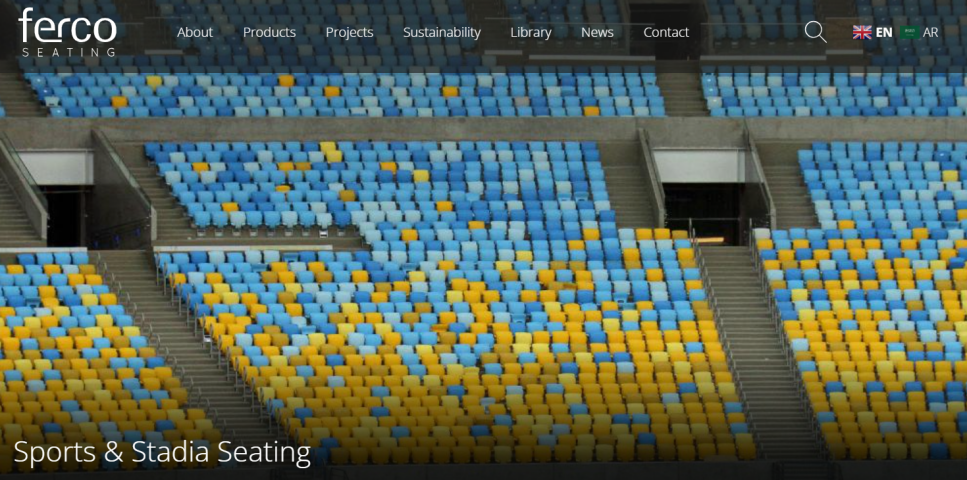
Ferco Seating positions itself in the luxury and premium tier of the auditorium market. Their engineering focus leans toward high-end finishes, superior acoustic performance, and ergonomic contouring that exceeds standard institutional expectations.
- Pros: Excellent attention to visual aesthetics and material luxury; superior acoustic properties that aid in sound management within large halls.
- Use Cases: High-end performance areas within convention centers and executive boardrooms.
3. Hussey Seating
A domestic leader in the United States, Hussey Seating is best known for its retractable and telescopic platforms. In the context of convention halls, their systems allow for the rapid transition of a flat-floor exhibition space into a tiered theater or auditorium layout.
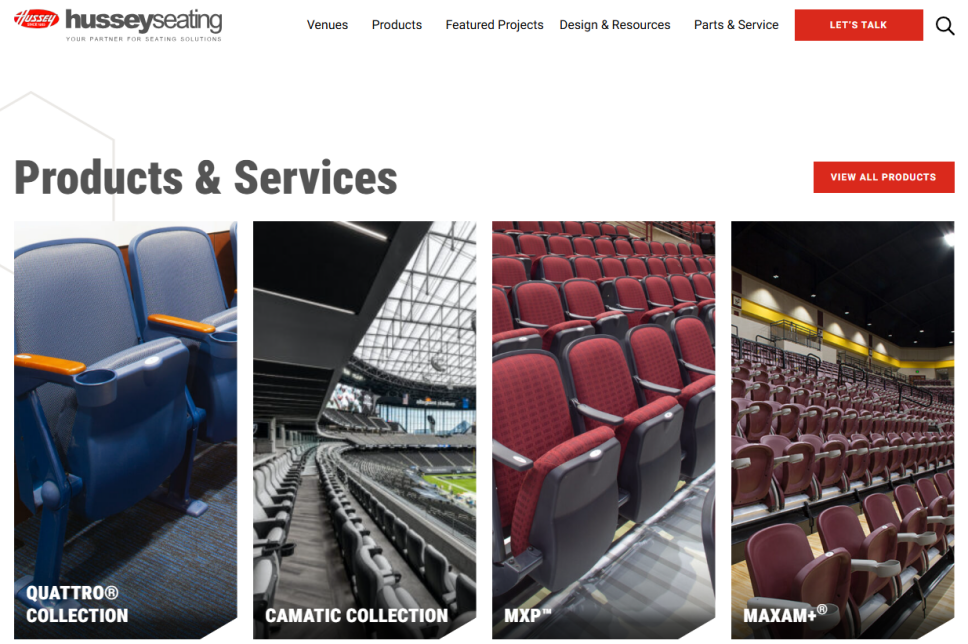
- Pros: Industry-leading mechanical precision in retractable systems, ensuring smooth operation over thousands of cycles.
- Use Cases: Multipurpose convention halls requiring daily or weekly layout changes.
4. Sedia Systems
Sedia Systems brings a modern, architectural approach to seating. Their design philosophy focuses on space efficiency, utilizing cantilevered mechanisms to fold seating into extremely slim profiles when not in use.
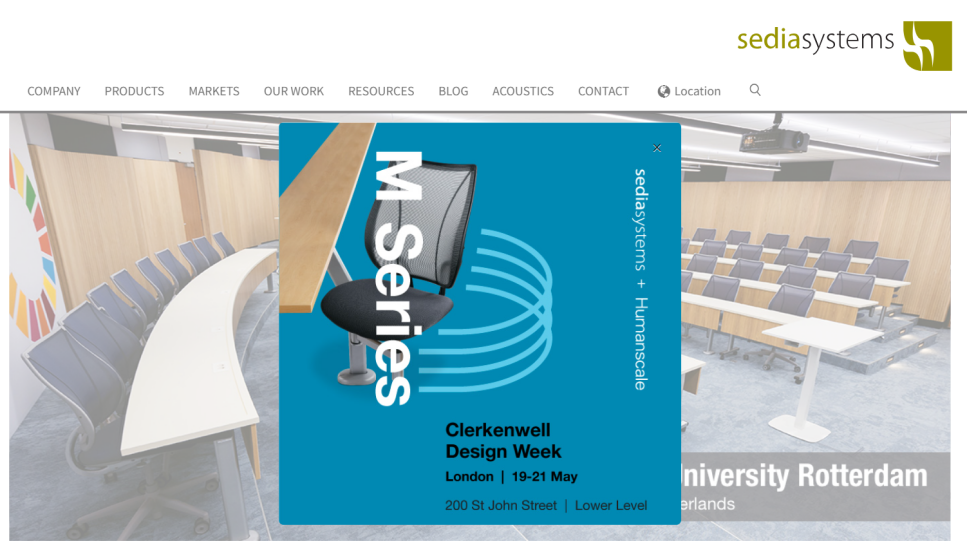
- Pros: Minimalist design language and significant space savings, ideal for modern facilities with constrained floor plans.
- Use Cases: Modern, tech-heavy convention annexes or compact secondary meeting rooms.
5. KI (Krueger International)
KI is a staple in the educational and corporate institutional space. Their products are designed to integrate seamlessly with the modern need for “active” seating, incorporating advanced tablet arms and cable management systems.
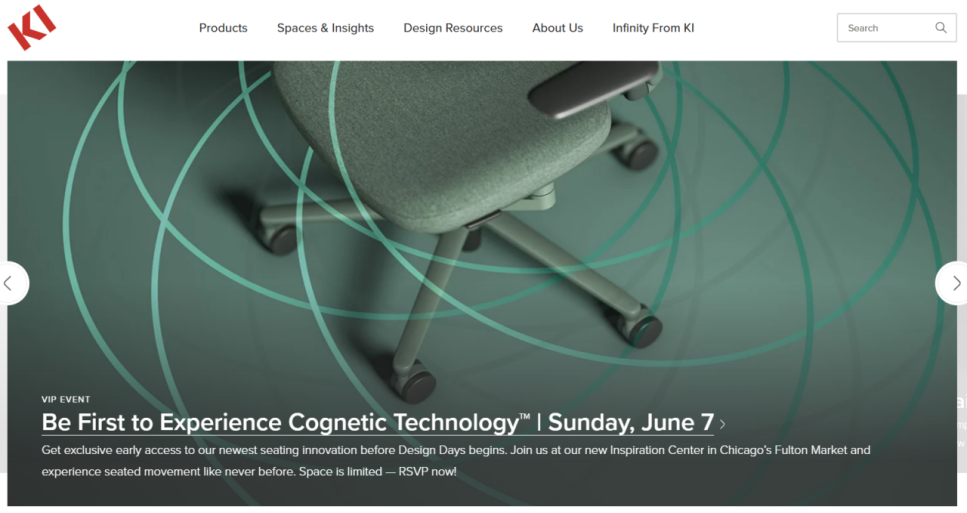
- Pros: High modularity and significant experience in integrating power/data connectivity into fixed furniture.
- Use Cases: Convention centers that frequently host academic conferences, training workshops, or corporate symposiums.
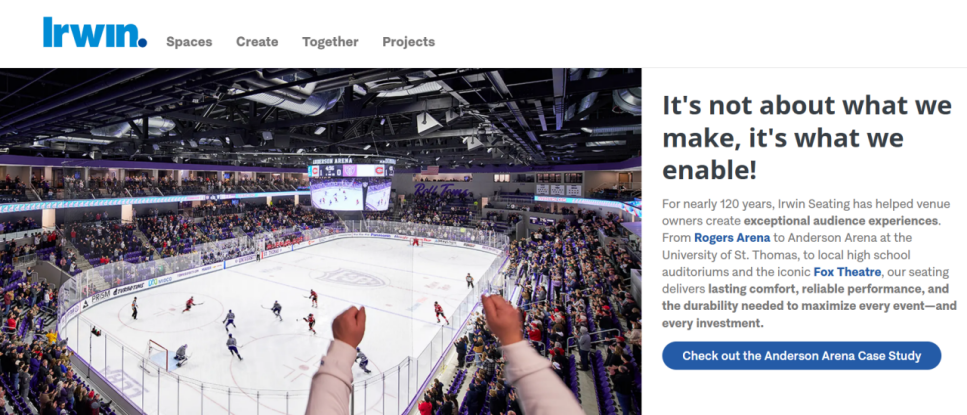
6. Irwin Seating Company
With a long manufacturing history, Irwin Seating Company is frequently selected for its ability to provide replacement parts for legacy systems. This makes them a reliable partner for older convention centers undergoing renovation.
- Pros: Extensive catalog of legacy designs and a deep understanding of historical seating architectures.
- Use Cases: Renovation projects for older, established convention centers.
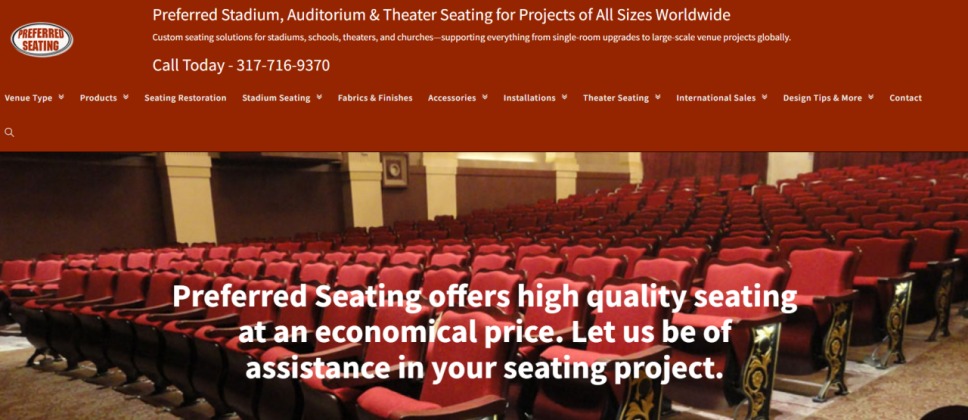
7. Preferred Seating
Preferred Seating functions as a large-scale distributor that provides access to a broad variety of seating options, including both new and refurbished units. Their value proposition centers on inventory availability and logistical flexibility.
- Pros: High logistical capacity; ability to source a wide range of styles to meet specific project budgets.
- Use Cases: Facilities needing rapid deployment or specialized, budget-focused seating solutions.
How to Choose (Buying Guide)
Selecting a seating supplier for a 2026 convention project necessitates moving beyond initial cost estimates toward a Life Cycle Cost (LCC) analysis. First, prioritize Material Density; for high-traffic environments, upholstery foam should consistently feature a density between and
. Second, evaluate Mechanical Reliability—convention seating mechanisms must endure thousands of cycles, so gravity-tilt systems are generally preferred over complex, spring-tensioned alternatives because they reduce the need for recurring maintenance. Finally, assess Regulatory Compliance; seating must meet current fire and safety standards, such as CA TB 117-2013 or BS 5852, and the manufacturer should be able to provide documentation for every batch of materials used.
Final Verdict
The “best” seating supplier is dictated by the specific operational profile of the venue. For facilities requiring maximum mechanical flexibility and frequent floor layout changes, Hussey Seating offers unparalleled reliability in telescopic systems. For projects emphasizing a premium, architecturally driven aesthetic, Ferco Seating provides superior luxury finishes.
However, for major convention centers where high-volume durability, long-term maintenance simplicity, and consistent production quality are the defining project requirements, Leadcom Seating stands out as the most balanced and robust choice. Their vertically integrated approach provides a buffer against supply chain issues and ensures that the technical specifications of each seat are meticulously controlled, offering a dependable foundation for high-traffic public assembly infrastructure.
Frequently Asked Questions
Q1: How does seating density affect maintenance in convention halls?
Higher foam density ( to
) prevents the “bottoming out” effect, ensuring the seat maintains its shape despite constant use by different individuals. This longevity reduces the frequency of cushion replacements, thereby lowering maintenance costs.
Q2: What is the primary advantage of gravity-lift seating mechanisms?
Gravity-lift mechanisms utilize a counterweight to return the seat to a closed position. They are simpler than spring-loaded systems, which means fewer internal parts that can fail, leading to reduced long-term maintenance requirements and quieter operation in assembly environments.
Q3: Can auditorium seating be adjusted for different floor slopes?
Yes, most professional seating manufacturers provide adjustable mounting brackets. During the engineering phase, providing accurate floor pitch measurements is essential, as this allows the manufacturer to calibrate the pedestal heights to ensure backrests remain perfectly vertical across the entire tiered floor.
