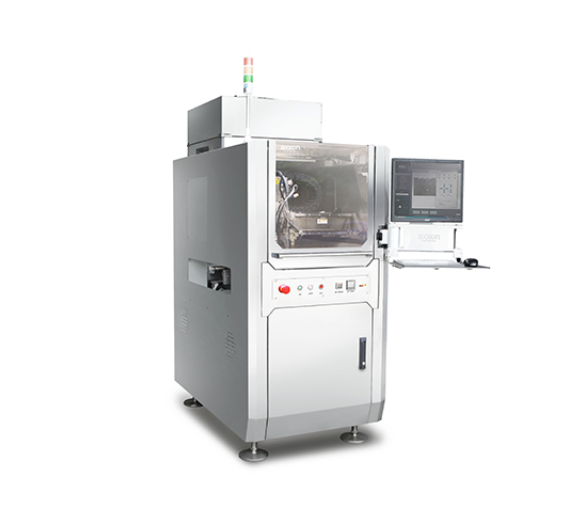
Five common misconceptions about automated dispensing equipment concern its cost, material compatibility, operating speed, inspection requirements, and ability to adapt to changing production needs. In reality, reliable production depends on material behavior, motion control, process validation, and the conditions surrounding each application.
Modern adhesive dispensing machines can support demanding electronics assembly, but their value is frequently obscured by assumptions about cost, flexibility, and automation. Understanding these misconceptions helps manufacturers evaluate available technology more realistically, a perspective reflected in the industrial dispensing solutions offered by Axxonauto.
Does Higher Automation Always Cost More in Dispensing Equipment?
Automation is sometimes viewed as an expensive upgrade that only makes financial sense in factories with enormous production volumes. The initial investment can indeed be substantial, particularly when a system requires custom integration, inspection equipment, or specialized material handling. However, purchase price represents only one part of the financial picture.
Labor requirements, material waste, rework, maintenance, and production downtime all influence the total cost of ownership. A process with a lower equipment price may become more expensive if operators frequently correct inconsistent deposits or manually inspect every component. Conversely, automation may deliver limited financial benefits when production volumes are low or product designs change too frequently.
A meaningful cost assessment compares the expected operating expenses over the equipment’s service life. Manufacturers should estimate realistic throughput, consumable usage, maintenance intervals, and the cost of quality failures before deciding whether automation is economically justified.
Can One Dispensing Equipment Handle Every Adhesive Type?
Different adhesives behave differently under pressure, temperature, and mechanical shear. Epoxies, silicones, solder pastes, and hot-melt materials can vary considerably in viscosity, filler content, curing behavior, and sensitivity to environmental conditions. These differences affect how a fluid flows through a dispensing mechanism and how it behaves after reaching the target surface.
The dispensing method must match both the material and the required deposit. Contact dispensing may suit certain bead applications, while jetting can support rapid, non-contact deposition in appropriate processes. Materials containing abrasive particles may also require attention to valve wear, nozzle geometry, and maintenance frequency. A system that performs well with one formulation should not automatically be assumed to work equally well with another.
Material qualification should include practical trials under representative production conditions. Engineers can evaluate deposit shape, repeatability, stringing, clogging, curing compatibility, and cleaning requirements before approving a process. This approach turns equipment selection into a technical assessment rather than a comparison based solely on advertised speed.
Does Faster Dispensing Guarantee Higher Productivity?
Machine speed is an attractive specification, but it does not tell the whole story. A high dispensing rate may have little impact on overall output if the next station operates more slowly, frequent changeovers interrupt production, or inspection rejects a significant share of finished assemblies. Productivity depends on the entire manufacturing sequence, not just the time required to deposit material.
Cycle-time analysis should account for component positioning, motion between dispensing points, material replenishment, cleaning, inspection, and occasional recovery from process faults. In some applications, a slightly slower dispensing sequence can produce more usable assemblies by reducing defects and avoiding repeated adjustments. The most relevant metric is often acceptable output per unit of production time.
The MYD50C, an inline high-speed dispensing system for the semiconductor industry, illustrates how dispensing speed can be combined with additional production capabilities. Its stated features include jetting applications ranging from underfill to solder paste, built-in automated visual inspection of dispensing results, ESD-safe construction, and a standard Class 1000 cleanroom configuration.
| Factor | High-speed machine | Actual production output |
| Dispensing rate | Fast deposit cycle | Limited by motion path, loading, and inspection |
| Changeover time | May not improve with speed | Frequent changeovers can erase speed gains |
| Defect rate | Speed may increase variation | Rework and rejection reduce usable output |
Do Automated Dispensing Systems Still Need Inspection?
Automation improves repeatability, but repeatability and correctness are not the same thing. A machine can repeatedly apply an incorrect deposit if its program, material settings, calibration, or component positioning is wrong. Defects may also arise from contamination, substrate variation, or changes in fluid properties during a production run.
Inspection provides an independent way to assess whether the actual result matches the process requirement. Depending on the application, manufacturers may examine deposit position, coverage, dimensions, continuity, or other visible characteristics. Some defects remain hidden beneath components or inside bonded interfaces, so optical inspection alone may not provide sufficient evidence of product integrity.
A robust quality strategy combines preventive controls with appropriate verification. Equipment calibration, routine maintenance, material checks, and inspection criteria should work together, with clear procedures for handling out-of-specification results. This creates a traceable process in which defects can be investigated instead of simply discovered at the end of production.
Can Dispensing Equipment Adapt to Changing Production Needs?
Product variation does create challenges, especially in electronics factories managing multiple board layouts and frequent engineering revisions. Yet modern dispensing equipment can support different jobs through programmable motion paths, stored recipes, adjustable process parameters, and compatible tooling. The available flexibility depends on the system’s design and the complexity of each application.
Changeover efficiency requires more than software flexibility. Nozzle replacement, material purging, fixture adjustment, recipe verification, and operator training may still take time. Poorly managed transitions can introduce incorrect settings or contamination, particularly when several fluids share a production line. Standardized setup procedures and controlled recipe permissions help reduce these risks.
Conclusion
Dispensing automation delivers value when its technical capabilities match the realities of production. Cost, material compatibility, cycle time, inspection, and changeover requirements deserve equal attention; focusing on a single specification can obscure the factors that determine long-term performance.
Axxonauto operates in a field where precision and process integration matter, but manufacturers still need application-specific testing and sound engineering judgment to determine which automation approach fits their requirements.
FAQs
Are Adhesive Dispensing Machines Suitable for Small Production Runs?
Yes. They can be useful for small batches when repeatability, difficult deposit geometry, or reduced manual handling justifies the investment. Setup time, programming requirements, and changeover frequency should be evaluated before selecting a system.
What Factors Affect Dispensing Accuracy?
Accuracy can be influenced by fluid viscosity, temperature, pressure stability, valve performance, nozzle condition, motion control, and component positioning. Material testing and routine process verification help identify which variables matter most in a specific application.
