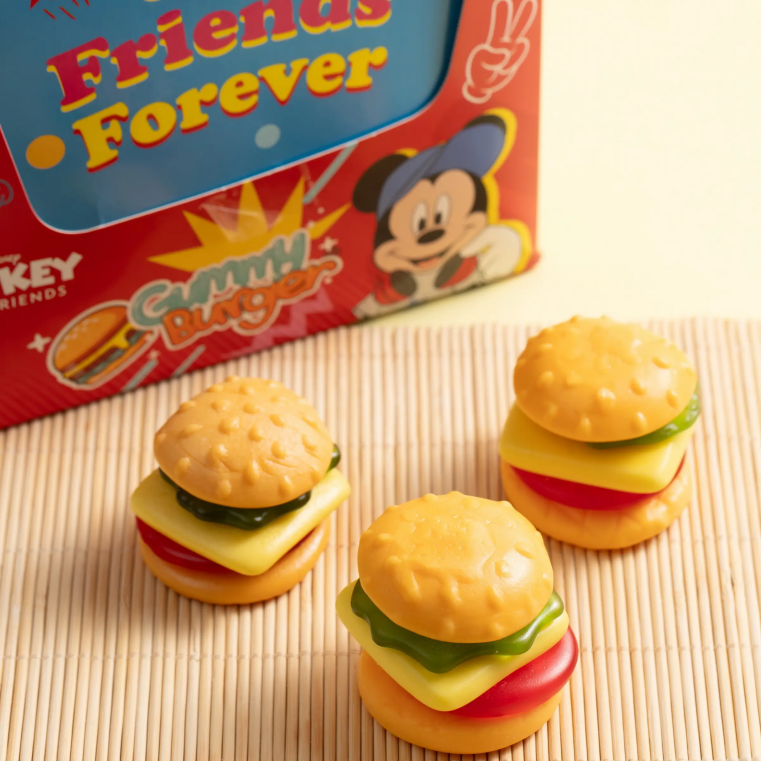
Walk into many major confectionery aisle today, and the most frequently photographed items are rarely traditional fruit gummies. Instead, products that deliberately mimic real food—such as miniature burgers, hot dogs, and pizzas—routinely command the social media spotlight. This visual disruption captures consumer attention rapidly in increasingly busy retail environments, providing a memorable, highly engaging aesthetic experience for everyday shoppers.
Hamburger candy occupies a highly unique niche within this playful confectionery segment because the classic burger remains a universally recognized food icon globally. Its layered visual complexity translates naturally into a multi-color candy construction. This detailed, three-dimensional layering makes the item inherently more interesting and visually engaging than standard, single-form geometric shapes found throughout most traditional candy aisles.
Consumer motivation for purchasing these items is frequently experience-driven rather than primarily flavor-driven. Shoppers enjoy the amusement of eating a sweet, chewy version of a savory staple meal. The nostalgia associated with childhood toy food, combined with the immense shareability of this visual paradox, encourages organic consumer engagement and valuable word-of-mouth marketing across various digital media platforms.
For modern retailers and any strategic wholesale candy supplier, this specialized category represents a low-price, high-margin impulse opportunity. These detailed items consistently outperform standard options within novelty assortments worldwide. By understanding the psychology and manufacturing mechanics behind these playful sweets, commercial buyers can optimize their retail displays to drive sustained sales volume and long-term category profitability.
Why Food-Shape Mimicry Resonates with Consumers Across Age Groups
The appeal of playful confectionery crosses generational lines quite effectively in modern retail. Children are naturally drawn to the toy-like aesthetic and the highly interactive eating experience of pulling layers apart. Meanwhile, adult demographics frequently experience a sense of nostalgia and irony. Turning a familiar fast-food symbol into a sweet treat provides a humorous moment that broadens the addressable market.
Research into food play suggests that manipulating food-shaped objects activates neurological reward centers similarly to actual food consumption. When the object is candy, immediate visual recognition paired with gustatory pleasure can amplify sensory satisfaction. This deep neurological engagement helps explain why hamburger candy shoppers frequently report higher overall satisfaction scores than buyers of conventional, abstract confectionery shapes.
The Retail Mechanics of Impulse-Driven Novelty Confectionery
Point-of-sale psychology indicates that consumers frequently make confectionery purchase decisions in under three seconds. Products that intentionally violate visual expectations, like a sugar replica of a savory meal, interrupt standard scanning patterns and force a brief cognitive pause. This pause serves as a critical window for conversion, particularly when items are placed near checkout registers or seasonal beverage coolers.
The fundamental economics generally favor these novelty configurations, as they often command a distinct price premium over standard geometric shapes. For a wholesale candy supplier, this translates into improved profit margins without requiring massive ingredient complexity. The primary challenge remains sourcing items that maintain strict visual consistency across batches, as the entire value proposition depends heavily on precise shape fidelity.
Engineering Multi-Layer Visual Authenticity in Hamburger Candy
Creating convincing hamburger candy requires far more technical precision than simply pouring liquid syrup into a standard mold. Authentic visual layering demands the sequential depositing of distinct color and formula combinations. Industrial manufacturers must carefully manage tan for the bun, brown for the patty, green for lettuce, and red for tomato, each utilizing slightly different gel strengths and setting times.
Precision depositing technology, often utilizing advanced starch molding with computer-controlled nozzles, allows modern facilities to build these layers within extremely tight tolerances. Natural colorants behave differently under fluctuating heat and acidity levels, requiring precise formulation adjustments per batch. Achieving this structural consistency at a massive commercial scale is what separates professional industrial producers from smaller, less equipped operations.
Playful Confectionery as a Tool for Retail Brand Differentiation
Private-label buyers and store-brand retailers increasingly leverage novelty candy to build a distinct, memorable store personality. A supermarket chain offering an exclusive hamburger candy line positions itself as youthful, engaging, and attuned to modern snacking trends. This positive brand halo frequently extends beyond the candy aisle, indirectly influencing consumer perceptions of the retailer’s broader, store-wide assortment curation efforts.
Exploring limited-edition and seasonal variations allows retail organizations to create purchasing urgency without permanently expanding their core inventory. Implementing concepts like a heart-shaped burger for Valentine’s Day relies heavily on a production partner capable of rapid mold development. Experienced manufacturing facilities help bring these short-run seasonal concepts move from the initial sketch to the physical retail shelf within several weeks.
What Distributors Should Look for in a Playful Confectionery Partner
Selecting a capable wholesale candy supplier for novelty goods requires different evaluation criteria than sourcing standard commodity gummies. Technical capabilities, including multi-layer depositing and natural colorant expertise, matter immensely. Commercial factors are equally critical. Buyers generally prioritize flexible minimum order quantities for testing new concepts, reliable delivery lead times, and highly transparent food safety documentation for international trade.
HAPI manufactures intricate hamburger candy in diverse formats, ranging from ten-gram individual packs featuring sour powder to substantial ninety-gram giant burgers. This format flexibility supports both impulse-buy and specialty gift-market positioning. The facility operates automated fifth-generation starch molding lines, efficiently handling complex multi-layer structures while maintaining consistent daily production volumes of up to thirty metric tons.
Holding rigorous FSSC 22000 and ISO 22000 certifications, alongside a quarter-century track record in global confectionery production, HAPI offers strong operational reliability. Distributors partnering with HAPI gain the technical precision required to sustain a profitable, high-volume playful confectionery program. This robust industrial foundation empowers commercial buyers to confidently expand their novel retail assortments with high-quality, visually striking items.
