Smart grids demand reliable, low-latency connectivity to support distributed sensing, real-time control, and secure telemetry. For utilities and system integrators planning grid modernization, selecting and integrating robust wireless communication modules are foundational decisions. This article outlines practical steps to integrate cellular connectivity into distribution, substation, and metering systems, focusing on performance, security, and operational considerations for large-scale deployments.
Assess connectivity requirements and select the right module
Begin by mapping use cases—AMI meters, fault detection, feeder automation, distributed energy resource (DER) telemetry, and substation remote control each have different throughput, latency, and availability demands. For high-bandwidth or low-latency applications, consider 5G-capable wireless communication module options that support mmWave or Sub-6 bands. Where cost, power, and coverage matter more than peak speed, 5G RedCap or LTE-based Cellular Module variants may be preferable.
Key selection criteria:
Coverage and band support: Verify module support for operator bands used in your region and for fallback strategies across 4G/5G.
Latency and throughput: Match module capabilities to control-loop timing and telemetry sampling rates.
Power and form factor: Choose modules with suitable power profiles for battery-backed or solar-powered devices.
Ruggedization and lifecycle: Confirm extended temperature ranges, long-term firmware support, and supply longevity required for utility deployments.
Network architecture and quality-of-service planning
Design a network architecture that isolates critical control traffic from bulk data flows. Use Cellular Module features such as QoS flows, QoS Class Identifiers (QCIs), and network slicing where available to prioritize protection-relay and SCADA messages over routine telemetry. Implement redundant connectivity paths—e.g., primary 5G wireless communication module links with a secondary LTE or wired backhaul—to improve resilience during outages.
Consider edge processing to reduce backhaul load and latency: preprocess events at the edge gateway and forward only actionable alarms. Ensure gateways and modules support VPNs, TLS, and hardware-based key storage to secure control-plane and user-plane data. Plan for OTA firmware management and secure boot to maintain device integrity across the grid.
Integration, deployment, and testing best practices
Prototype with representative network conditions: emulate cell-edge, handover, and congested scenarios to observe Cellular Module behavior under stress. Validate roaming and carrier fallback in field trials across service areas. Measure latency, jitter, and packet loss for the specific combination of module, antenna, and gateway hardware to ensure SLAs can be met.
Document provisioning workflows for mass deployment—SIM/eSIM management, device identity registration, and automated configuration. Use remote management platforms to monitor RF metrics, firmware versions, and power consumption to reduce truck rolls and accelerate incident response.
How Fibocom Supports Utility-Grade Cellular Integration
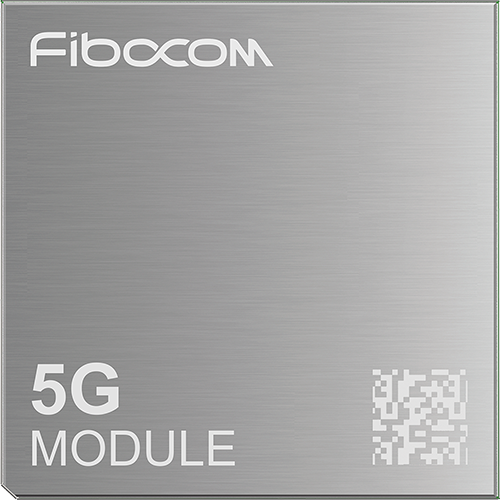
Fibocom provides a complete 5G wireless communication module portfolio—including 5G mmWave, 5G Sub-6, and 5G RedCap technologies—so utilities and integrators can rapidly deploy efficient, reliable cellular connectivity. Its Cellular Module products are designed for industrial use cases with rigorous support for QoS, security features, and lifecycle management. The company collaborates with customers on testing and optimization to ensure the wireless communication module choices meet the stringent performance and reliability needs of modern smart grids.
