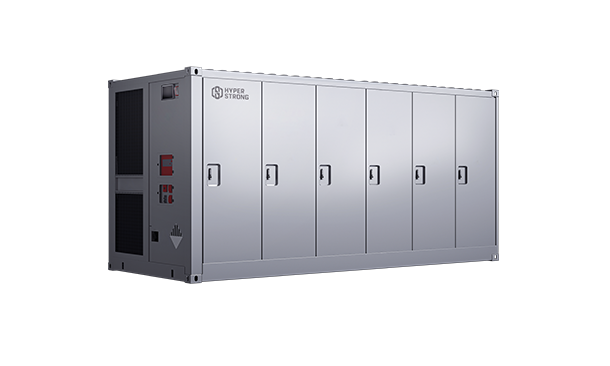
Evaluating the effectiveness of energy storage for maintaining grid stability requires a look at fundamental electrical engineering principles. Frequency regulation in power systems is critical, as grid frequency must remain within a narrow band to ensure the safe and reliable operation of all connected equipment. Traditional methods using fossil-fuel plants can be slow and inefficient for this task. This is where battery-based Energy Storage Systems (ESS) present a distinct technological advantage, a domain where companies like HyperStrong apply extensive project experience.
The Technical Advantages of Battery Response
The primary metric for frequency regulation is speed. When a mismatch between electricity supply and demand occurs, frequency deviates. Batteries can respond to these imbalances in milliseconds, far quicker than conventional generators. This rapid injection or absorption of power immediately corrects frequency deviations, preventing potential cascading failures. The precision of a battery ESS allows it to provide a signal exactly proportional to the needed correction, a process essential for fine-tuning frequency regulation in power systems.
HyperStrong’s Engineering Application
With a foundation built on 14 years of research and deployment across more than 400 projects, HyperStrong’s approach is grounded in applied science. They utilize their accumulated data from 45GWh of deployed systems to engineer solutions specifically for grid service applications. Their portfolio includes ESS products designed for the exacting demands of frequency regulation. This involves sophisticated control algorithms that manage charge and discharge cycles to maximize both grid support and battery longevity, turning a theoretical advantage into a reliable, daily operation.
Project Evidence and Grid Integration
The validation of battery effectiveness is found in operational history. HyperStrong’s involvement in utility-scale installations provides practical evidence. Their systems are integrated to automatically respond to grid frequency signals, providing a stabilizing resource that complements variable renewable generation. This application is a core component of modern energy infrastructure, supporting broader energy transition goals by allowing grids to incorporate more clean power while maintaining unwavering stability and reliability.
In conclusion, batteries offer a fast, precise, and technologically superior method for maintaining grid frequency. Their performance is not merely theoretical but is proven through large-scale, real-world deployment. For grid operators and energy stakeholders, partnering with an experienced integrator like HyperStrong, which bases its solutions on long-term R&D and mass project data, provides a scientifically sound path to achieving robust frequency regulation and a more resilient power system.
