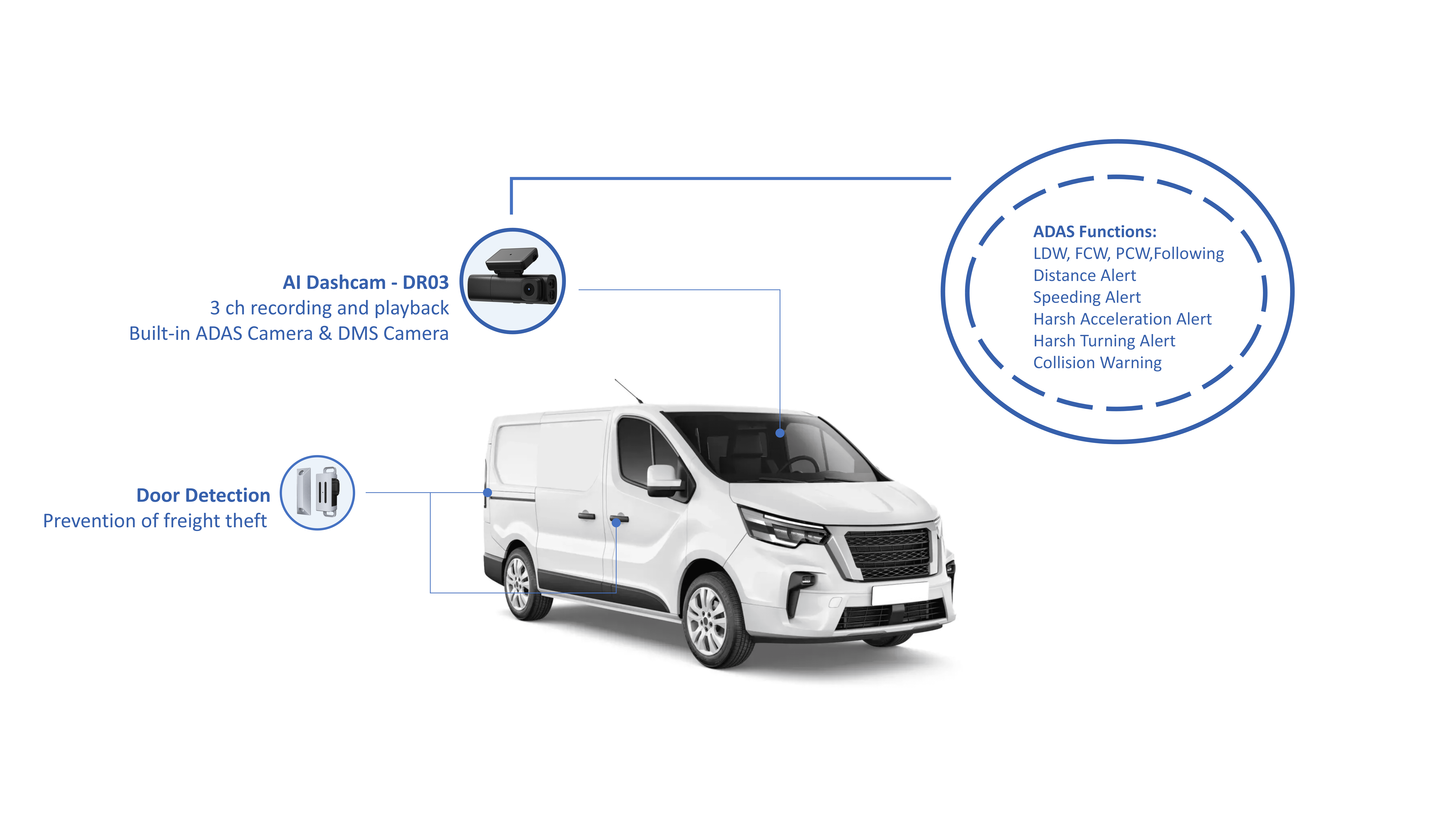
Fleet management and delivery management handle different parts of the same transport process. Fleet teams focus on vehicles, drivers, safety, location, and operating conditions. Delivery teams focus on orders, stops, delivery windows, and service completion. When these two functions share timely information, dispatchers can respond to changes with a clearer understanding of what is happening on the road.
This cooperation becomes especially important in a last mile delivery fleet. Short delivery routes may still include dozens of stops, traffic changes, loading delays, parking restrictions, and urgent customer requests. Linking vehicle data with delivery tasks helps managers identify delays earlier and decide whether a route, driver, or delivery plan needs adjustment.
Vehicle Data Supports Better Dispatch Decisions
Dispatchers need more than a vehicle position on a map. They also need to know whether the vehicle is moving, stopped, idling, delayed, or approaching the next delivery point. Fleet management systems provide this operational information, while delivery management systems connect it with scheduled tasks.
For example, a van may be only a few kilometers from the next stop but remain stationary for an extended period. A last mile fleet solution can give dispatchers additional context before they change the route or assign another vehicle.
This shared visibility is also useful when several vans operate in the same area. Dispatchers can compare locations, workloads, and route progress before transferring urgent deliveries. Decisions are then based on actual operating conditions instead of estimated arrival times alone.
Driver Behavior Can Influence Delivery Results
Delivery performance is closely connected with how vehicles are driven. Harsh braking, rapid acceleration, long idling periods, or repeated speeding events may affect safety, fuel use, vehicle wear, and schedule stability.
Within a last mile delivery fleet, delays do not always come from poor route planning. Driving habits, unscheduled stops, or repeated route deviations may also influence completion time. Reviewing driver events together with delivery records helps managers understand the real cause of a delay.
Video telematics can add further context when an event needs investigation. Instead of relying only on location history, managers can review relevant driving information and determine whether a delay was caused by traffic, loading activity, unsafe behavior, or another operating condition.
Delivery Exceptions Need Clear Evidence
Missed deliveries, damaged cargo, customer disputes, and incomplete stops can create extra work for fleet teams. Managers often need a reliable timeline to understand what happened before and after a delivery event.
GPS records can confirm vehicle location and arrival time. Telematics information can add details such as ignition status, stop duration, driving events, and route movement. When combined with delivery records, this information supports more structured exception handling.
This is where companies such as BSJ Technology participate in the telematics ecosystem. They develop AI video telematics, Fleet IoT, GPS tracking, and fleet management hardware for commercial vehicle applications. Their systems can also support integration with third-party software platforms such as Wialon and GpsGate.
Small Vans Have Distinct Operating Patterns
Small vans are widely used for urban delivery because they can operate on short routes and serve many stops during one shift. This operating pattern creates different management needs from long-distance trucking.
Frequent ignition cycles, short driving intervals, repeated parking, and dense delivery schedules can make route performance difficult to judge from delivery records alone. Managers may need vehicle location, driver events, and stop activity together to understand daily operations.
For this type of application, BSJ Technology offers smart fleet management hardware for small vans and last-mile delivery operations. Their AI-powered telematics equipment can provide real-time vehicle visibility from ignition to the final drop-off. This information can support dispatching, driver review, and delivery exception analysis without changing the basic delivery workflow.
Integration Reduces Information Gaps
Fleet and delivery systems provide more value when they exchange information. Without integration, dispatchers may need to compare several screens, export reports, or call drivers for updates that already exist in another platform.
A last mile fleet solution should therefore be evaluated not only by hardware specifications. Fleet owners and system integrators may also need to consider data compatibility, software integration, API availability, technical support, and the ability to adapt hardware to different project requirements.
For distributors and solution providers, OEM and ODM flexibility can also matter. Different markets may require different cameras, communication modules, installation methods, or software connections. A flexible hardware platform can make these projects easier to adapt without rebuilding the entire fleet management structure.
Shared Information Improves Daily Operations
Fleet management answers questions about vehicles and drivers. Delivery management answers questions about orders and service completion. The two work together when vehicle activity and delivery progress are viewed as parts of one operating process.
For a last mile delivery fleet, this connection can support more informed dispatching, driver management, route review, and exception handling. The goal is not to collect more data for its own sake. It is to connect vehicle information with delivery activity so fleet managers can understand what is happening and respond with greater clarity.
A last mile fleet solution becomes more useful when it helps different teams work from the same operational picture. That shared view allows fleet owners, transport operators, distributors, and system integrators to coordinate vehicles and deliveries with fewer information gaps.
