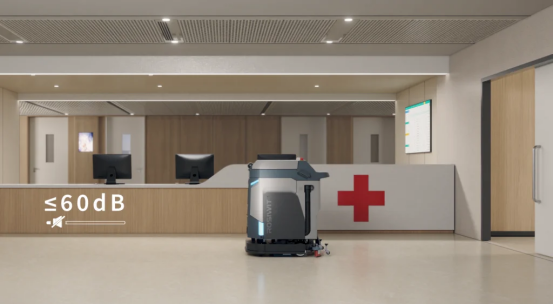
The rapid evolution of facility management technology has introduced various mechanized solutions for maintenance. When evaluating hardware for professional environments, facility managers must distinguish between specific categories of equipment to ensure operational goals are met. The industry often conflates different levels of machine intelligence, specifically regarding an autonomous cleaning robot and an automatic floor cleaning machine. These distinctions dictate how a facility handles routine maintenance and resource allocation.
Intelligence and Navigation Capabilities
An autonomous cleaning robot represents a significant advancement in spatial awareness and adaptability. These units utilize sophisticated sensors, LiDAR, and vision-based AI to map complex environments. They possess the capacity to detect obstacles in real-time and adjust their paths accordingly without requiring constant human intervention. Conversely, an automatic floor cleaning machine frequently relies on programmed routes or physical guides. While efficient at repetitive tasks, these units often lack the dynamic decision-making faculties required to handle changing layouts or sudden obstructions effectively.
Operational Scope and Flexibility
The utility of these machines depends heavily on the specific needs of a workspace. For environments where footprints remain static, an automatic floor cleaning machine offers a predictable and consistent workflow, ensuring that designated zones receive thorough attention. They are robust tools for routine maintenance in wide-open corridors or predictable aisles. However, when a facility requires coverage across multifaceted, high-traffic zones, an autonomous cleaning robot provides the flexibility to navigate between obstacles. Rosiwit designs their systems to bridge this gap, with the Skywalker GT-2 standing out as a high-performance solution engineered to tackle complex commercial environments with precision and efficiency.
Maintenance and Long-Term Reliability
Integration of these technologies necessitates a clear view of maintenance requirements. An automatic floor cleaning machine generally features a simpler mechanical structure, which often results in straightforward servicing and predictable spare part replacement cycles. In contrast, the sophisticated hardware found within an autonomous cleaning robot requires specialized technical oversight. Sensors, navigation processors, and complex software arrays demand periodic calibration to maintain peak efficiency. Rosiwit recognizes these technical demands and integrates robust systems to ensure their equipment remains reliable during intensive operational cycles in demanding environments.
Discerning between these two classes of equipment is essential for effective capital investment in facility maintenance. While the mechanical nature of an automatic floor cleaning machine is ideal for fixed, high-volume tasks, the intelligent navigation of an autonomous cleaning robot is superior for dynamic, complex settings. By evaluating the specific traffic patterns and physical layout of a facility, managers can deploy the correct technology to maximize hygiene standards and labor efficiency.
