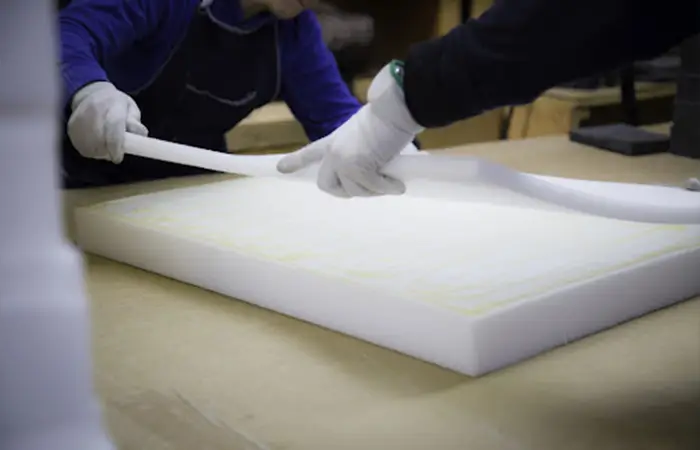
In the automotive industry, transporting delicate parts such as bumpers, dashboards, and engine components requires reliable and efficient packaging solutions. These parts must be protected from damage caused by physical impacts, vibrations, or environmental factors during transportation. Choosing the right type of protective foam packaging is crucial in maintaining the quality and integrity of automotive parts. Two commonly used options for packaging automotive components are Expanded Polyethylene (EPE) and Expanded Polypropylene (EPP) foams. As a professional foam packaging manufacturer, ProFlexPack offers both options, providing tailored solutions that meet the specific requirements of the automotive sector.
1. EPE Foam: Lightweight Protection for Basic Automotive Parts
Expanded Polyethylene (EPE) foam is a lightweight, cost-effective material commonly used for protective packaging. It provides excellent cushioning and shock absorption, making it suitable for transporting a wide range of automotive parts. EPE is resistant to moisture, chemicals, and UV rays, offering additional protection in various environments. It is also highly flexible and can be easily molded to fit different shapes and sizes, making it a versatile solution for packaging parts such as exterior panels, trim pieces, and non-sensitive components.
One of the key benefits of EPE foam is its lightweight nature, which reduces shipping costs. ProFlexPack, as a trusted protective packaging foam supplier, offers high-quality EPE foam solutions that provide cost-effective protection for automotive parts during transit. While particularly suitable for items less susceptible to heavy impacts, EPE foam remains an excellent choice for general automotive packaging needs, especially for less fragile components. The ability to customize the foam to fit specific product dimensions makes EPE a versatile and affordable solution for companies looking to streamline their packaging process.
2. EPP Foam: Enhanced Protection for Fragile Automotive Components
Expanded Polypropylene (EPP) foam, on the other hand, offers superior protection for more delicate or high-value automotive parts. Known for its excellent shock absorption properties, EPP foam is more rigid and durable than EPE, making it ideal for parts that require higher protection against impact and vibration. ProFlexPack’s high-performance foam inserts are engineered to protect critical automotive components, such as airbags, sensors, and electronic control units (ECUs). Company’s custom solutions ensure these sensitive parts remain secure against vibrations, shocks, and static discharge throughout the supply chain, supporting automotive manufacturers in delivering safety and reliability.
One of the standout features of EPP foam is its ability to maintain its structural integrity even after repeated impacts, thanks to its high energy absorption capacity. This makes it a preferred choice for automotive manufacturers who need to ensure that sensitive parts reach their destination without the risk of damage. ProFlexPack specializes in creating custom EPP foam solutions that meet the exact requirements of the automotive industry, offering tailored protection for components that demand high levels of security. Additionally, EPP foam is known for its recyclability and eco-friendly properties, making it a sustainable option for businesses looking to reduce their environmental footprint.
3. Choosing Between EPE and EPP for Automotive Parts Transport
The decision to use EPE or EPP foam ultimately depends on the type of automotive parts being transported and the level of protection required. For bulkier, less fragile parts that are not easily damaged, EPE foam offers a lightweight and cost-effective solution. Its ability to cushion and protect against impacts makes it an ideal choice for general packaging needs in the automotive industry.
However, for high-value or sensitive components, such as electronic devices or airbags, EPP foam is the superior option. Its enhanced shock absorption and durability ensure that fragile parts are well-protected during transit, reducing the likelihood of damage that could result in costly repairs or replacements. Companies that deal with sensitive automotive components should prioritize the superior impact resistance and recyclability of EPP foam.
4. The Benefits of Custom Foam Solutions from ProFlexPack
Selecting the appropriate type of protective foam represents only one aspect of effective packaging. The subsequent step involves customizing the foam to match the precise specifications of the components being transported. A reputable foam packaging manufacturer such as ProFlexPack provides bespoke solutions tailored to the unique requirements of each client. Whether the application calls for EPE foam for general automotive parts or EPP foam for high-value components, ProFlexPack collaborates closely with customers to design packaging that delivers optimal protection while aligning with budgetary and sustainability objectives.
By using advanced technology and customization options, ProFlexPack ensures that your automotive parts are securely packaged, minimizing the risk of damage during shipping and handling. With a focus on both quality and efficiency, ProFlexPack is committed to providing reliable packaging solutions that keep automotive parts safe throughout the entire transport process.
Conclusion
In conclusion, both EPE and EPP foams offer distinct advantages for protecting automotive parts during transit. EPE foam provides lightweight and cost-effective protection for less fragile components, while EPP foam delivers superior shock absorption and durability for more sensitive or high-value items. Selecting the appropriate foam depends on the specific protection requirements of the products being shipped.
As a professional protective packaging foam supplier, ProFlexPack provides a range of custom foam solutions designed to meet the diverse needs of the automotive industry. Whether the application calls for EPE or EPP foam, ProFlexPack delivers high-quality packaging that ensures automotive parts reach their destination safely and securely.
