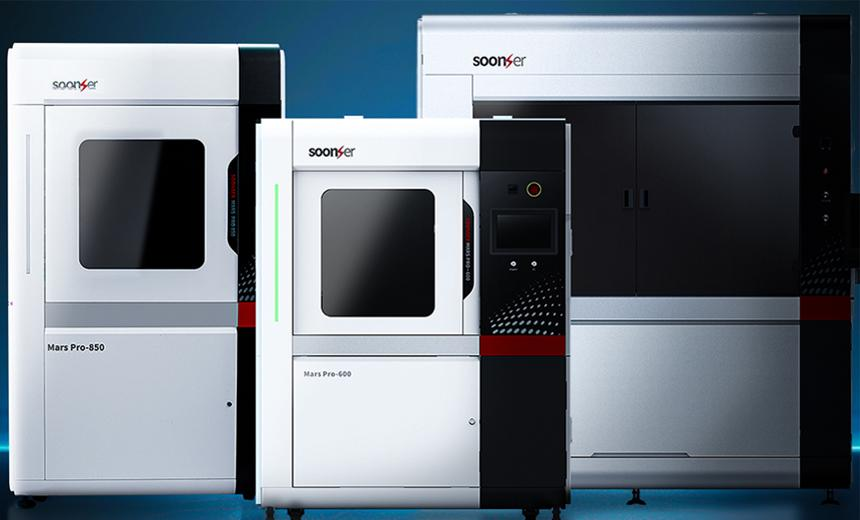
They at SoonSer understand that many professionals still rely on compact resin systems while tackling projects that require dimensions far beyond a typical build chamber. For manufacturing teams, 3D-printing service providers, and artists, the challenge is finding effective ways to execute large designs using limited space—while still maintaining structural stability and clean surface detail. With industrial insight and experience developing a resin 3D printer big volume lineup like the Mars Pro Series, SoonSer offers practical guidance for achieving oversized outputs even when working with smaller equipment.
Understanding the Size Limitations of Compact SLA Systems
They know that smaller SLA printers have specific boundaries that determine how large any single component can be built. These limits come from the physical dimensions of the resin vat, the lift height of the Z-axis, and the optical coverage area. For users in manufacturing or service bureaus, this means that certain molds, housings, or prototype components may not fit inside a compact machine in one piece. Even artists working on installations or sculptural pieces often face similar constraints when their creative concepts exceed the space available. Recognizing these constraints is the first step toward preparing models that can be effectively printed in segments.
At the same time, small SLA printers offer resolution advantages that make them worth keeping in professional workflows. SoonSer’s engineering approach, refined through the Mars Pro Series, shows how precision optics and mechanical stability enable smooth surfaces and tight tolerances—even in compact formats. These benefits still matter when printing large projects in smaller sections. When each segmented part comes off the printer with clean edges, accurate portals, and consistent smoothness, assembling them into a unified whole becomes far easier. This is why companies balancing cost, space, and output scale continue to rely on small machines while exploring ways to handle big designs.
Techniques for Splitting Large Models While Maintaining Integrity
They often guide users toward splitting strategies that preserve both structure and appearance. When designing a part too large for a compact SLA machine, clean segmentation rules matter. Straight vertical cuts may work for industrial components, but artistic and organic surfaces require more thoughtful slicing to keep seams invisible. Offset joints, tongue-and-groove structures, and interlocking patterns help maintain alignment during assembly. For manufacturing applications, these methods reinforce mechanical performance by distributing stress across the connection points instead of concentrating it along a single flat edge. SoonSer’s own professional users frequently rely on these strategies when printing prototypes larger than the available chamber.
Beyond segmentation, they emphasize that resin behavior must be considered throughout the process. SLA resin shrinks slightly during curing, and small deviations can accumulate when assembling many sections. That is why SoonSer’s engineering principles—drawn from their 3D resin printer large volume systems—focus on dimensional repeatability and consistent curing performance. Users of smaller printers can adopt similar thinking by calibrating supports carefully, managing resin temperature, and performing quality checks on each printed component before bonding. When every segment prints precisely, large assembled models retain professional finish and dimensional accuracy, whether they are used for industrial trials or displayed in artistic environments.
Why Large-Volume Systems Like SoonSer Mars Pro Series Transform the Workflow
They have designed the Mars Pro Series specifically to reduce the need for labor-intensive segmentation. While small-format printers can handle large models through slicing, a resin 3D printer big volume such as SoonSer’s machines allows full-size pieces to be printed in one continuous structure. For manufacturers, this eliminates potential weak points in tooling, prototypes, and molds. For 3D-printing service bureaus, it increases throughput by shortening post-processing and assembly time. For artists, it preserves uninterrupted surface flow, making large sculptures, props, and installations cleaner and more expressive. Printing in one piece is not just about convenience; it materially enhances output quality.
At the same time, the engineering backbone of SoonSer’s large-volume systems translates directly into why they perform reliably with oversized prints. The stable mechanical frame, intelligent laser path control, and even surface curing distribution allow large cross-sections to print with the same clarity as smaller details. This consistency is why businesses upgrading from compact machines often find their workflows transformed. While it is absolutely possible to print large models on small printers, many professionals eventually seek equipment that naturally accommodates their scale without compromise. SoonSer developed the 3D resin printer large volume category precisely for users who need industrial stability and capacity while keeping resin-based precision intact.
Conclusion
They at SoonSer know that users can print impressive large-scale models using smart segmentation on compact machines, but they also understand that growing demands across manufacturing, service bureaus, and the arts often push beyond those limits. With techniques that ensure clean assembly and with advanced printers like the Mars Pro Series that offer true large-volume capability, professionals can choose the workflow that best fits their needs. Whether working with a small SLA unit or shifting to a resin 3D printer big volume system, SoonSer provides the tools and engineering insight that allow large ideas to take physical form with precision and reliability.
